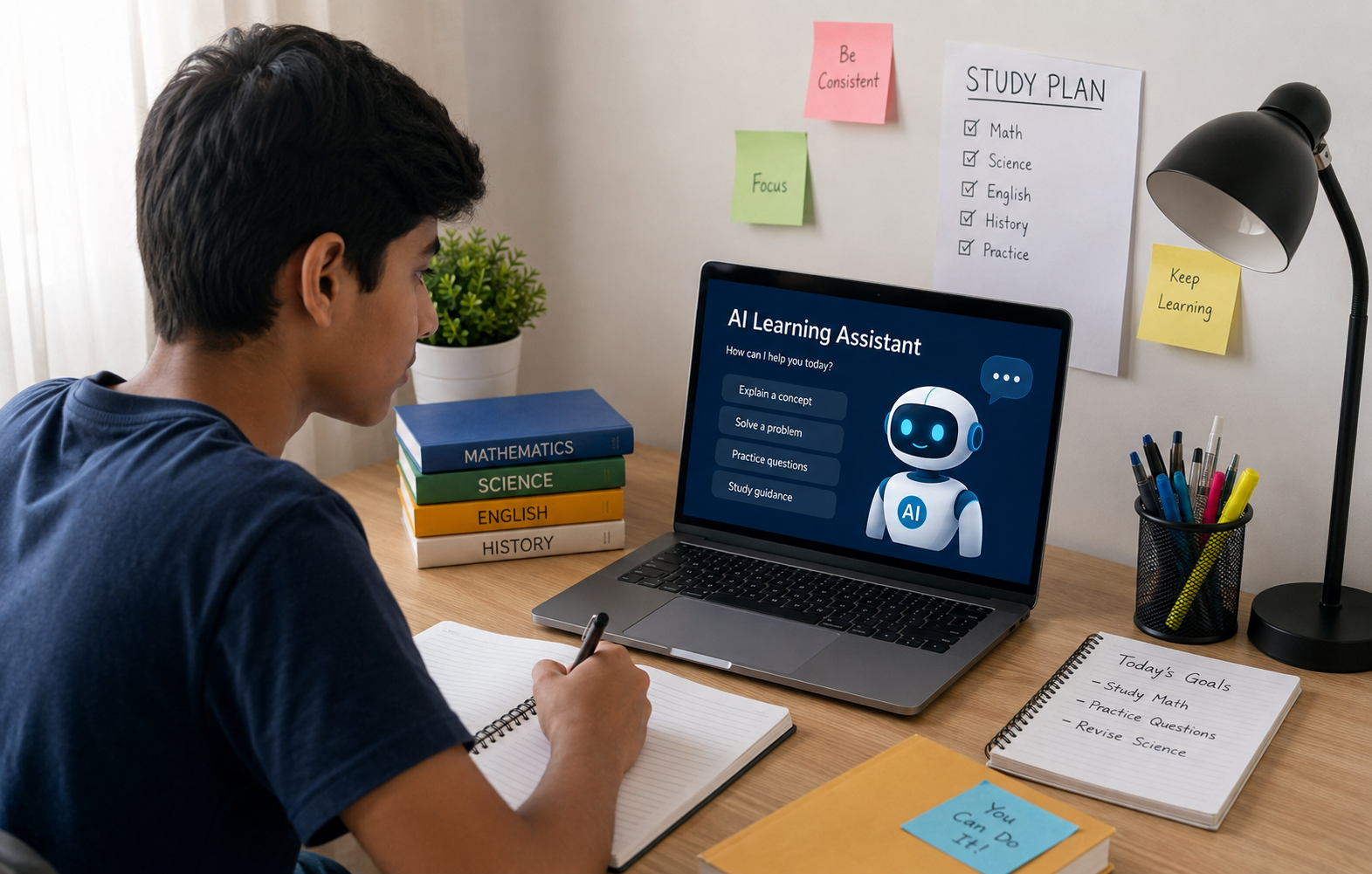
Artificial intelligence is changing many parts of modern life, and education is one of the areas where its impact is becoming more visible. Students today have access to digital tools that can help them understand difficult topics, practice their skills, organize their studies, and receive quick feedback. When used correctly, AI can become a useful learning partner that supports both students and teachers.
The use of AI in education is not about replacing teachers or making students depend completely on technology. Instead, the main goal is to make learning more personalized, accessible, and effective. AI tools can identify areas where students need help and provide learning support according to their individual needs. This can lead to better understanding, stronger study habits, and improved student performance.
Personalized Learning With AI
One of the biggest benefits of AI in education is personalized learning. Every student learns differently. Some students understand a topic quickly, while others need more examples and practice. Traditional classroom teaching can sometimes make it difficult for teachers to give every student individual attention.
AI learning tools can help solve this problem by analyzing student activity and performance. They can identify subjects where a student is struggling and suggest additional exercises or explanations. For example, if a student repeatedly makes mistakes in mathematics, an AI tool can provide simpler examples and extra practice questions.
Personalized learning allows students to move at a comfortable pace. Students who need more time can practice without feeling embarrassed, while advanced students can explore more challenging topics. This can improve confidence and academic performance over time.
AI Provides Quick Feedback
Feedback plays an important role in student learning. Students need to know what they are doing correctly and where they need improvement. Waiting several days for feedback on an assignment can sometimes slow the learning process.
AI tools can provide immediate feedback on many types of educational activities. Students can use AI based platforms to check answers, identify common mistakes, and understand why an answer may be incorrect. Quick feedback allows students to correct mistakes before they become repeated habits.
For example, when learning grammar, a student can use an AI writing tool to identify sentence structure problems and receive suggestions for improvement. The student can then study the explanation and improve future writing instead of simply correcting one assignment.
AI Helps Students Understand Difficult Topics
Some academic subjects can be difficult to understand from textbooks alone. AI can explain complicated concepts in simpler language and provide different examples based on a student’s level of understanding.
A student studying science, mathematics, history, or computer studies can ask an AI learning tool to explain a topic step by step. If the first explanation is difficult, the student can request a simpler explanation or ask for an example.
This flexibility can make learning less frustrating. Students can explore a topic repeatedly until they understand it. AI can also support visual and interactive learning when educational platforms provide these features.
AI Supports Better Study Habits
Good study habits are important for academic success. However, many students struggle with time management, organization, and maintaining a regular study routine.
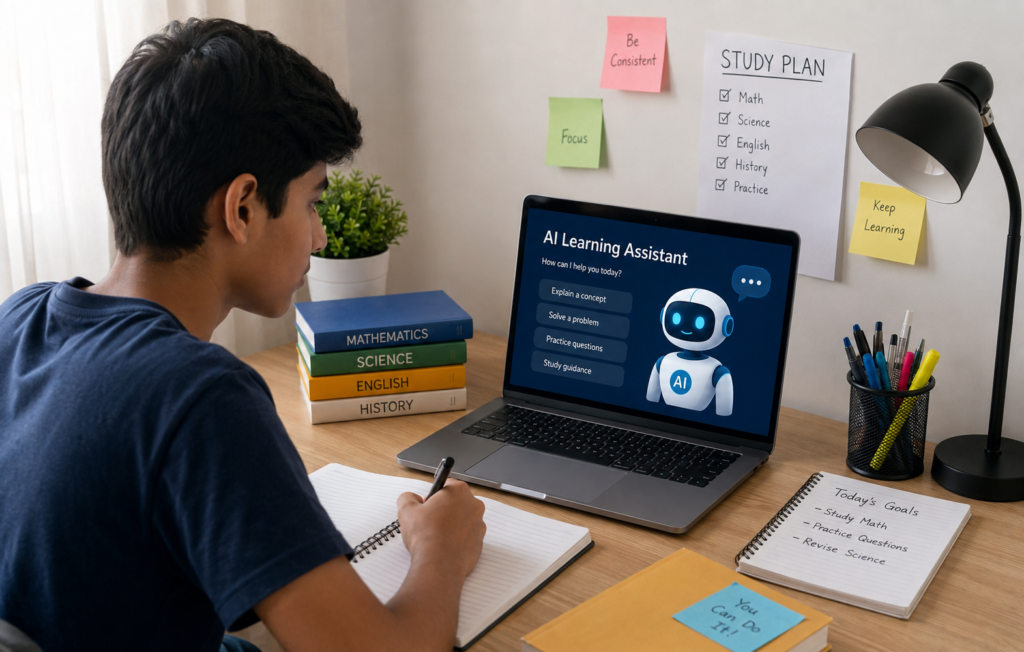
AI can help students create study schedules based on their subjects, deadlines, and available time. Students can use AI tools to divide large assignments into smaller tasks and create revision plans before examinations.
For example, a student preparing for several exams can organize subjects according to difficulty and importance. The AI tool can suggest a study routine that gives additional practice time to weaker subjects.
Better organization can reduce last minute studying and help students feel more prepared for tests and assignments.
AI Can Improve Research Skills
Research is an important part of education. Students need to learn how to find information, understand different sources, compare ideas, and present information clearly.
AI can support students during the research process by helping them understand unfamiliar terms, generate research questions, organize ideas, and summarize complex information. However, students should still check important information using reliable sources.
The purpose of AI should be to support research skills rather than replace them. Students should learn how to question information and verify facts instead of accepting every AI generated answer as correct.
AI Encourages Active Learning
Active learning means students participate in the learning process instead of simply reading or listening. AI can make learning more interactive by allowing students to ask questions and practice concepts through conversations.
For example, an AI tool can act as a practice tutor by asking questions about a lesson. The student can answer and receive feedback before moving to the next question. This approach can encourage students to think about what they have learned.
AI can also create quizzes, practice questions, and revision exercises based on a specific topic. Regular practice can improve memory and help students identify areas that require more attention.
AI Helps With Writing Skills
Writing is an essential skill for students at almost every educational level. AI can support students by helping them understand grammar, sentence structure, vocabulary, and organization.
Students can use AI to review their writing and identify areas that need improvement. They can also ask for explanations of grammar rules or suggestions for making their ideas clearer.
However, students should avoid copying complete AI generated assignments and submitting them as their own work. The best approach is to use AI as a learning assistant. Students should develop their own ideas, write in their own words, and use AI feedback to improve their skills.
AI Supports Students With Different Learning Needs
Students have different learning abilities and educational needs. Some students may benefit from simpler explanations, additional repetition, or alternative ways of presenting information.
AI can make educational content more accessible by adjusting explanations and providing different learning formats. For example, a student who finds a complex paragraph difficult can ask an AI tool to explain it in simpler language.
This flexibility can make learning more comfortable and inclusive. Students can receive support without always needing to wait for individual assistance from a teacher.
AI Can Increase Student Motivation
Motivation can have a major effect on student performance. When students understand their progress and receive encouragement, they may become more interested in learning.
AI learning platforms can provide progress information, practice challenges, and personalized activities. Seeing improvement can encourage students to continue working toward their academic goals.
AI can also make repetitive practice more engaging by creating different questions and examples. When students feel that learning is interactive and connected to their needs, they may be more willing to participate.
AI Helps Teachers Support Students
Although the focus is often on students, AI can also help teachers improve student performance. Teachers can use AI tools to identify common learning problems, create practice materials, develop quizzes, and organize educational content.
When technology reduces some routine tasks, teachers may have more time to focus on classroom interaction and individual student support. AI can provide useful information about learning patterns, but teachers should remain responsible for important educational decisions.
The combination of teacher experience and AI technology can create a stronger learning environment.
Responsible Use of AI in Education
AI can provide many benefits, but students need to use it responsibly. One major concern is overdependence on AI. If students use AI to complete every assignment, they may miss opportunities to develop important skills.
Students should use AI for learning, practice, explanations, and feedback rather than simply searching for ready made answers. They should also verify information because AI systems can sometimes produce inaccurate or incomplete responses.
Privacy is another important issue. Students should avoid sharing sensitive personal information with AI tools. Schools and families should teach students about responsible and safe technology use.
Conclusion
AI can improve student performance by making education more personalized, interactive, accessible, and responsive. It can provide quick feedback, explain difficult topics, support better study habits, improve writing skills, and help students practice according to their individual needs.
The most effective use of AI in education is not about replacing traditional learning. It is about combining technology with teachers, textbooks, classroom activities, critical thinking, and independent study. Students who learn how to use AI responsibly can gain valuable support while still developing their own knowledge and skills.
As artificial intelligence continues to develop, its role in education is likely to become even more important. When students use AI as a learning assistant rather than a shortcut, it can become a powerful tool for improving understanding, confidence, and overall student performance.