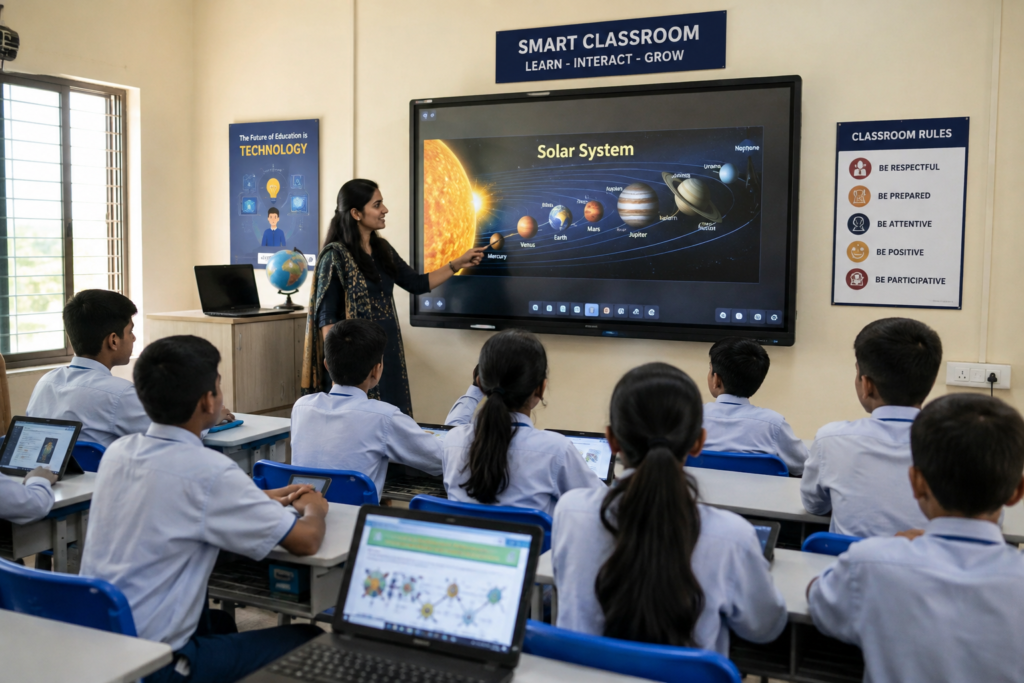
Education is changing rapidly as technology becomes an important part of everyday learning. One of the biggest developments in modern education is the rise of smart classrooms. A smart classroom uses digital tools, interactive technology, internet connected devices, multimedia resources, and educational software to create a more engaging learning environment. Instead of depending only on textbooks, notebooks, and traditional lectures, teachers can now use videos, presentations, interactive boards, digital activities, online resources, and learning platforms to explain difficult topics.
Smart classrooms are transforming education by making learning more interactive, flexible, personalized, and accessible. They also help teachers manage lessons more effectively and give students new opportunities to develop skills that are important for the modern world.
What Is a Smart Classroom?
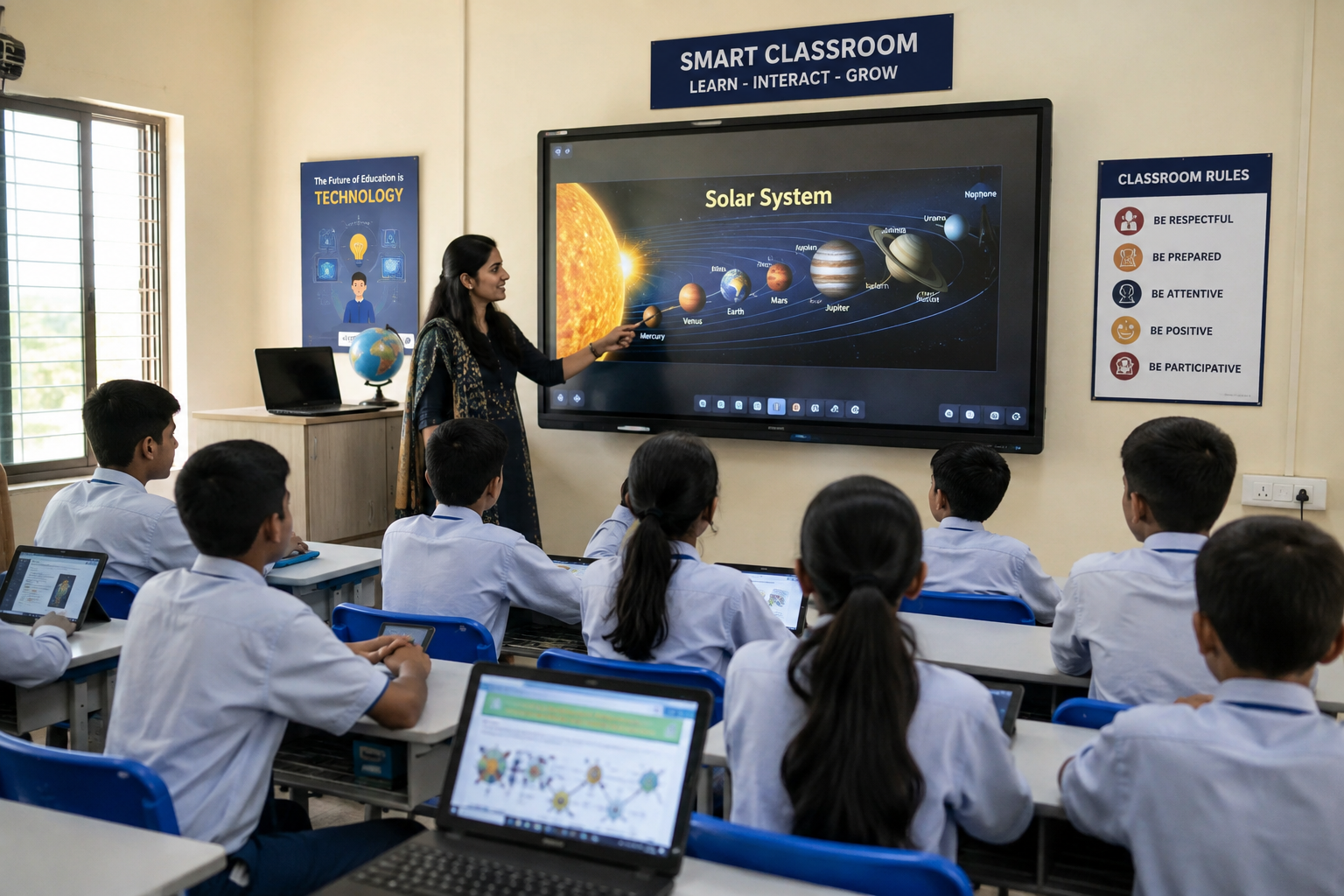
A smart classroom is a learning environment where technology is integrated into the teaching and learning process. It may include interactive whiteboards, computers, tablets, projectors, digital learning platforms, educational applications, internet resources, virtual learning tools, and smart assessment systems.
The purpose of a smart classroom is not simply to add technology to a classroom. The main goal is to improve the learning experience. Technology allows teachers to present information in different ways and gives students more opportunities to participate actively.
For example, a science teacher can use an animation to explain how the human heart works. A geography teacher can show interactive maps, while a mathematics teacher can use digital simulations to demonstrate complex equations. These methods can make lessons easier to understand and more memorable.
Making Learning More Interactive
One of the biggest benefits of smart classrooms is increased student interaction. Traditional teaching often depends heavily on lectures, where students listen and take notes. While this method can still be useful, students may lose concentration when lessons are not engaging.
Smart classroom technology allows teachers to introduce videos, animations, quizzes, games, simulations, and interactive exercises. Students can answer questions using digital devices and participate in classroom activities instead of simply listening.
Interactive learning can encourage students to become more involved in lessons. When students actively participate, they may develop better understanding and stronger interest in the subject.
Improving Student Engagement
Keeping students interested in education can be challenging, especially when lessons contain complicated information. Smart classrooms provide teachers with different ways to make subjects more interesting.
Visual content can be particularly useful for younger learners. Images, diagrams, animations, and videos can help explain ideas that may be difficult to understand through written descriptions alone.
For example, instead of reading only about historical events, students can watch educational documentaries and explore digital timelines. Instead of studying planets only through a textbook, students can explore virtual models of the solar system.
This variety can make lessons more enjoyable and encourage students to pay greater attention.
Personalized Learning Experiences
Every student learns differently. Some students understand information quickly, while others need additional explanations and practice. Smart classrooms can support personalized learning by providing access to different learning materials.
Digital platforms can allow students to review lessons at their own pace. A student who finds a topic difficult can watch an explanation again, complete additional exercises, or use another educational resource. Students who understand the lesson quickly can move toward more advanced activities.
This flexibility can help create a learning environment where students receive support according to their individual needs.
Better Access to Educational Resources
Smart classrooms give students access to a large amount of educational information. Instead of depending only on a limited number of textbooks, teachers and students can use digital libraries, online courses, educational websites, research databases, and multimedia resources.
This can be especially valuable when students want to explore a topic beyond the classroom curriculum. They can research different subjects, compare information, and discover new ideas.
Access to digital resources also allows teachers to update their teaching materials more easily. Modern information can be added to lessons without waiting for new printed textbooks.
Helping Teachers Teach More Effectively
Smart classroom technology is not only beneficial for students. It can also make teaching more efficient. Teachers can prepare digital presentations, organize educational materials, create online assignments, and use digital assessment tools.
Interactive displays allow teachers to explain concepts using diagrams, videos, charts, and other visual materials. Digital platforms can also help teachers distribute assignments and communicate instructions.
Technology can reduce some administrative work and give teachers more time to focus on teaching and supporting students.
Faster Assessment and Feedback
Assessment is an important part of education because it helps teachers understand whether students are learning effectively. Smart classrooms can make assessment faster and more convenient.
Online quizzes and digital tests can provide immediate results. Students can see which questions they answered incorrectly and review the related topics. Teachers can also identify areas where many students are struggling.
Fast feedback allows learning problems to be addressed earlier. Instead of waiting several days for a paper assignment to be checked, students may receive feedback shortly after completing a digital activity.
Supporting Remote and Hybrid Learning
Smart classroom technology has also changed the way students can access education outside the traditional classroom. Online learning platforms, video communication tools, digital assignments, and cloud based resources make it possible for students to continue learning from different locations.
Hybrid learning combines classroom education with online learning. Students can attend lessons physically while also using digital resources for additional study.
This flexibility can be helpful for students who cannot always attend traditional classes or who need additional learning materials at home.
Developing Digital Skills
Modern workplaces increasingly require digital skills. Students need to understand how to use technology responsibly and effectively.
Smart classrooms provide opportunities for students to develop these skills from an early stage. Students may learn how to research information online, create digital presentations, work with educational software, communicate through digital platforms, and organize online projects.
These skills can prepare students for higher education and future careers. Digital literacy is becoming an essential part of modern education.
Encouraging Collaboration
Technology can also support teamwork. Students can work together on digital presentations, research projects, documents, and creative activities.
Collaborative learning helps students develop communication, problem solving, leadership, and teamwork skills. These abilities are valuable not only in school but also in professional environments.
For example, students can work in small groups to research a topic and create a multimedia presentation. Each student can contribute different ideas while learning how to cooperate with others.
Making Complex Subjects Easier
Some educational topics are difficult to explain using words alone. Smart classroom technology can make complicated subjects easier by providing visual and practical demonstrations.
In science classes, students can observe simulations of chemical reactions or biological processes. In mathematics, digital graphs can demonstrate how equations work. In engineering and technology subjects, three dimensional models can help students understand structures and systems.
These visual learning methods can improve comprehension because students can see concepts in action rather than simply reading about them.
Challenges of Smart Classrooms
Although smart classrooms offer many advantages, they also have challenges. Technology can be expensive, especially for schools with limited budgets. Devices require maintenance, reliable internet connections, software updates, and technical support.
Teachers also need proper training to use technology effectively. Simply placing smart devices in a classroom does not automatically improve education. Teachers must know how to integrate technology into lessons in meaningful ways.
Another challenge is distraction. Students may become distracted by entertainment, social media, or unrelated online content. Schools need clear rules and responsible technology use to ensure that digital devices support learning rather than reduce concentration.
The Future of Smart Classroom Education
The future of education is likely to include even more advanced technology. Artificial intelligence, virtual reality, augmented reality, intelligent tutoring systems, and advanced learning platforms may provide students with increasingly personalized educational experiences.
Artificial intelligence can help analyze learning progress and recommend suitable educational materials. Virtual reality may allow students to explore historical locations, scientific environments, or complex structures through immersive experiences.
However, technology will not replace the importance of teachers. Teachers provide guidance, encouragement, emotional support, creativity, and human interaction. The most effective education will likely combine technology with strong teaching methods and meaningful relationships between teachers and students.
Conclusion
Smart classrooms are transforming education by creating more interactive, flexible, and technology supported learning environments. They provide students with better access to educational resources, personalized learning opportunities, faster feedback, and valuable digital skills.
For teachers, smart classroom technology can improve lesson delivery, assessment, communication, and classroom management. At the same time, schools must address challenges such as cost, teacher training, technical problems, and digital distractions.
The real value of smart classrooms comes from using technology with a clear educational purpose. When teachers combine modern tools with effective teaching strategies, technology can make learning more engaging and accessible. As digital education continues to develop, smart classrooms will play an increasingly important role in preparing students for a rapidly changing world.