
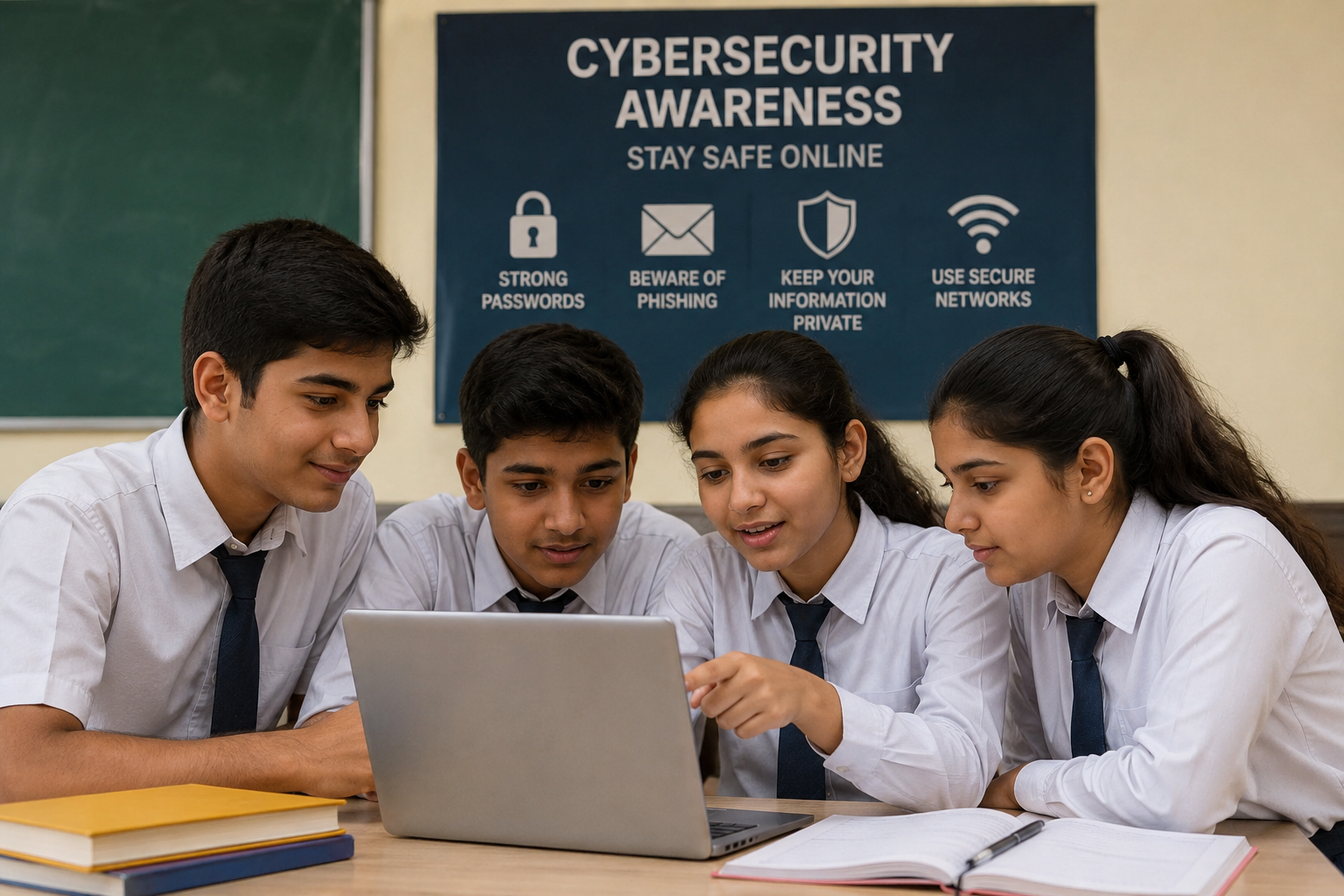
In today’s digital world, students use technology for almost every part of their education and daily life. They attend online classes, search for information, communicate with teachers, submit assignments, use educational apps, create social media accounts, and store personal information online. While technology makes learning easier and faster, it also creates new security risks. This is why cybersecurity awareness for students has become extremely important.
Cybersecurity awareness means understanding how to stay safe while using computers, smartphones, websites, applications, and online services. Students who understand basic cybersecurity can protect their personal information, avoid online scams, create stronger passwords, and recognize dangerous websites or messages. Learning these skills at an early age can help students become responsible and confident internet users.
What Is Cybersecurity Awareness?
Cybersecurity awareness is the knowledge and understanding needed to use digital technology safely. It teaches people how cyber threats work and what they can do to protect themselves from them. For students, cybersecurity awareness includes learning about strong passwords, phishing attacks, malware, privacy settings, safe browsing, social media security, and responsible online behavior.
Students do not need to become cybersecurity experts to stay safe online. They simply need to understand common risks and develop good digital habits. Small actions such as using unique passwords, avoiding suspicious links, and keeping software updated can make a major difference.
Why Cybersecurity Awareness Is Important for Students
Students are frequent users of digital technology, which makes them potential targets for cybercriminals. They may receive fake messages, download harmful files, visit unsafe websites, or share personal information without understanding the consequences.
Cybersecurity awareness helps students recognize these dangers before they become serious problems. It also teaches them how to respond when something suspicious happens. Instead of clicking a strange link or sharing sensitive information, an aware student is more likely to stop and verify the situation.
Online safety is not only about protecting devices. It is also about protecting identity, personal information, academic work, and digital reputation.
Protection Against Phishing Scams
Phishing is one of the most common online threats. In a phishing attack, criminals may send fake emails, messages, or website links designed to trick users into providing passwords, account details, or other private information.
Students can easily become victims because phishing messages may look like real communication from schools, teachers, banks, or popular online services. Cybersecurity awareness teaches students to check the sender, examine website addresses, avoid unexpected attachments, and think carefully before clicking links.
Learning to identify phishing attempts can protect students from account theft and other online problems.
Strong Passwords and Account Security
Passwords are one of the first lines of defense against unauthorized access. Many students use simple passwords that are easy to remember but also easy for attackers to guess. Using the same password for several accounts can create an even bigger risk.
Cybersecurity education teaches students how to create strong and unique passwords. Students should avoid using obvious information such as their name, birthday, or favorite sports team. Where available, they should also use multi factor authentication because it provides an additional layer of account protection.
Good password habits developed during school years can remain useful throughout a person’s education and professional life.
Protecting Personal Information
Students share a large amount of information online. This may include their full name, photographs, school information, location, phone number, email address, and other personal details. Sharing too much information can create privacy and security risks.
Cybersecurity awareness teaches students to think before posting or sharing information. They should understand that content posted online may remain available for a long time, even after it has been deleted from an account.
Students should review privacy settings on social media platforms and avoid sharing sensitive information publicly. Understanding digital privacy helps them maintain greater control over their online identity.
Safe Use of Social Media
Social media is an important part of modern student life. Students use platforms to communicate with friends, follow educational content, share ideas, and participate in online communities. However, social media can also expose users to scams, fake profiles, cyberbullying, identity theft, and privacy problems.
Cybersecurity awareness helps students use social media responsibly. They can learn how to recognize suspicious accounts, avoid unknown links, report harmful content, and control who can view their information.
Students should also remember that online communication should be treated with the same level of respect and responsibility as communication in real life.
Preventing Malware and Harmful Downloads
Malware is malicious software designed to damage devices, steal information, or gain unauthorized access. Students may accidentally download malware through unsafe websites, unknown attachments, pirated software, or suspicious applications.
Cybersecurity awareness teaches students to download software only from trusted sources and avoid opening unexpected files. Keeping operating systems, browsers, and applications updated is also important because updates often include security improvements.
Using reliable security software and following safe downloading practices can reduce the risk of malware infections.
Cybersecurity and Online Learning
Online education has made learning more accessible to students around the world. Students can attend virtual classes, access digital libraries, submit assignments, and communicate with teachers through online platforms.
However, online learning also requires good cybersecurity habits. Students should protect their educational accounts and avoid sharing login information with others. They should use secure networks whenever possible and be careful when accessing school platforms from shared or public devices.
Protecting educational accounts is important because these accounts may contain assignments, grades, personal information, and communication with teachers.
Importance of Cybersecurity Education in Schools
Schools have an important role in developing cybersecurity awareness among students. Cybersecurity should not be treated as a topic that only computer science students need to understand. Every student who uses digital technology can benefit from basic online safety education.
Teachers can introduce cybersecurity concepts through classroom activities, discussions, demonstrations, and practical examples. Students can learn how to identify phishing emails, create secure passwords, protect their privacy, and respond to suspicious online activity.
Schools can also establish clear digital safety policies and explain them to students. When cybersecurity becomes part of everyday education, students are more likely to develop safe habits naturally.
Cyberbullying and Responsible Digital Behavior
Cybersecurity awareness is also connected to responsible digital behavior. Cyberbullying can cause serious emotional and social problems for students. It can happen through social media, messaging applications, gaming platforms, and other online spaces.
Students should understand how to respond to cyberbullying safely. They should avoid responding aggressively, save evidence when necessary, block harmful accounts, and report inappropriate behavior to trusted adults or platform administrators.
Teaching students about digital responsibility can create safer online communities and encourage respectful communication.
Benefits of Cybersecurity Awareness for Students
There are many benefits of cybersecurity awareness for students. First, it helps protect personal information from unauthorized access. Second, it reduces the chances of students becoming victims of scams and phishing attacks. Third, it encourages responsible use of social media and online services.
Cybersecurity awareness also improves digital confidence. Students who understand online risks can use technology more effectively because they know how to protect themselves. These skills can also prepare students for future workplaces where cybersecurity and data privacy are increasingly important.
Most importantly, cybersecurity awareness encourages students to think carefully before making decisions online.
Simple Cybersecurity Tips for Students
Students can improve their online security by following a few simple practices. They should create strong and unique passwords for important accounts and use multi factor authentication whenever possible. They should avoid clicking suspicious links or downloading unknown files.
Students should keep their devices and applications updated and use trusted websites for downloads. They should also review privacy settings and avoid sharing sensitive personal information online.
It is important to log out of accounts when using shared computers and avoid entering private information on suspicious websites. Students should also tell a teacher, parent, or trusted adult if they experience a serious online security problem.
The Future of Cybersecurity Awareness
As technology continues to develop, cybersecurity awareness will become even more important. Students will increasingly use artificial intelligence, cloud services, digital payment systems, smart devices, and online learning platforms. These technologies offer many benefits, but they also introduce new security challenges.
Future students will need strong digital skills to identify risks and protect their information. Schools, teachers, parents, and technology companies can work together to provide students with practical cybersecurity education.
Teaching cybersecurity today can help create a safer digital environment for tomorrow.
Conclusion
The importance of cybersecurity awareness for students cannot be ignored in the modern digital age. Students spend a significant amount of time online for education, communication, entertainment, and social activities. Without proper knowledge, they can become vulnerable to phishing, malware, identity theft, cyberbullying, and privacy risks.
Cybersecurity awareness gives students the knowledge they need to make safer decisions online. Learning about strong passwords, phishing protection, privacy, safe downloads, social media security, and responsible digital behavior can protect students from many common threats.
Cybersecurity is not only a technical issue. It is an essential life skill for every modern student. By teaching students how to use technology safely and responsibly, schools and families can help them become smarter, more confident, and better prepared for the digital future.