Artificial Intelligence is becoming an important part of modern education. Schools, colleges, universities, teachers, and students are already using AI tools to make learning easier and more personalized. The future of Artificial Intelligence in education looks even more powerful because new technologies are improving the way students learn and teachers teach. AI can help understand student needs, provide quick support, automate routine tasks, and create better learning experiences.
The use of Artificial Intelligence in education is not about replacing teachers. Instead, the main goal is to support teachers and give students better opportunities to learn. As technology continues to improve, AI may become a regular part of classrooms, online education, homework, assessments, and educational planning.
What Is Artificial Intelligence in Education?
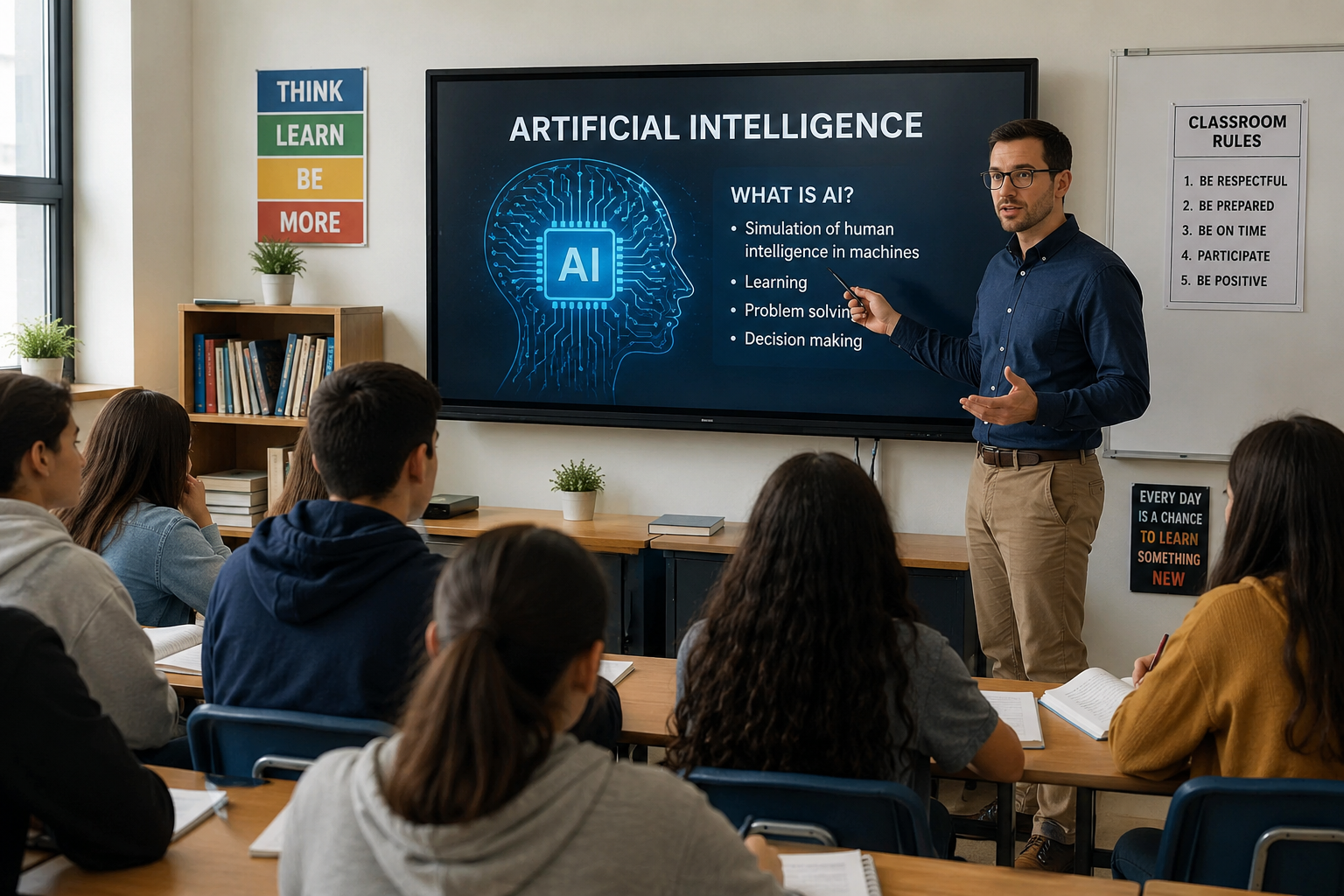
Artificial Intelligence in education means using intelligent computer systems to support teaching and learning. These systems can analyze information, understand patterns, answer questions, generate educational content, and provide useful recommendations.
AI education tools can help students with subjects such as mathematics, science, languages, history, and computer studies. Students can ask questions and receive explanations based on their learning level. Teachers can also use AI to prepare lesson plans, create quizzes, check assignments, and understand student performance.
The future of Artificial Intelligence in education will bring more advanced systems that can understand individual learning needs and provide support at the right time.
Personalized Learning Will Become More Common
One of the biggest benefits of AI in education is personalized learning. Every student learns differently. Some students understand a topic quickly, while others need more practice and explanation.
Artificial Intelligence can analyze a student’s performance and identify areas where the student needs help. AI systems can then recommend exercises, videos, questions, or reading materials based on the student’s needs.
In the future, personalized learning may become a normal part of education. Students could receive learning activities that match their skills, interests, and progress. This can make education more flexible and help students learn at their own pace.
AI Will Support Teachers
Teachers have many responsibilities beyond classroom teaching. They need to prepare lessons, create assignments, check student work, manage records, and communicate with students and parents.
Artificial Intelligence can reduce some of these routine tasks. AI tools can help teachers create quizzes, organize educational materials, generate examples, and analyze student results. This can save valuable time.
The future of AI in education will allow teachers to focus more on important human responsibilities such as communication, creativity, motivation, emotional support, and classroom interaction.
AI should work as a teaching assistant rather than a replacement for teachers. Human teachers understand emotions, relationships, and individual circumstances in ways that technology cannot completely replace.
Intelligent AI Tutors
AI tutors could become one of the most important developments in the future of education. An AI tutor can provide students with immediate assistance when a teacher is not available.
For example, if a student is struggling with a mathematics problem, an AI tutor could explain the concept step by step. If the student still does not understand, the system could provide another explanation or a simpler example.
Future AI tutors may become more interactive and capable of understanding student behavior. They could recognize when a student is confused and adjust the explanation automatically.
This could provide students with additional learning support outside normal classroom hours.
Better Online Education
Online education has become an important part of modern learning. Artificial Intelligence can make online education more effective by providing personalized recommendations and automated support.
AI can analyze how students interact with online courses and identify which lessons they complete successfully and where they struggle. Based on this information, learning platforms can recommend specific lessons or activities.
In the future, online learning platforms may become more intelligent and interactive. Students could receive customized study plans based on their goals and learning progress.
AI Can Improve Educational Assessment
Assessment is another area where Artificial Intelligence can make a difference. Traditional assessments often depend on exams and assignments. AI can provide additional ways to understand student performance.
AI systems can analyze answers, identify common mistakes, and provide immediate feedback. This allows students to understand their weaknesses more quickly.
Teachers can also use AI generated reports to identify topics that many students are struggling with. They can then spend more classroom time explaining those topics.
However, human teachers should continue to review important assessments because AI systems can sometimes make mistakes or misunderstand answers.
Language Learning Will Become Easier
Artificial Intelligence can also change the way students learn languages. AI powered language tools can help students practice vocabulary, grammar, pronunciation, reading, and writing.
Future AI systems may provide realistic conversations that allow students to practice speaking without feeling nervous. They could also correct mistakes and explain why a particular sentence is incorrect.
This can make language learning more accessible for students around the world.
AI and Special Education
The future of Artificial Intelligence in education may also provide new opportunities for students with different learning needs. AI can support accessibility through speech recognition, text to speech technology, translation tools, and personalized learning systems.
Students who have difficulty reading may benefit from audio based learning. Students who have difficulty writing may use speech based tools to express their ideas.
AI can help create flexible learning environments where students have different ways to understand and communicate information.
AI Will Help Create Smart Classrooms
Smart classrooms are expected to become more advanced as Artificial Intelligence develops. Future classrooms may use AI systems to analyze learning activities and provide teachers with useful information.
For example, an AI system could help identify which students are participating, which topics are difficult, and which learning materials are producing better results.
Technology may also connect digital learning platforms, classroom devices, educational software, and assessment systems. This can create a more connected learning environment.
Challenges of AI in Education
Although the future of Artificial Intelligence in education is promising, there are also important challenges. Privacy is one major concern because educational AI systems may collect information about students.
Schools need to make sure that student information is protected and used responsibly. Teachers and educational institutions should also understand how AI systems make decisions.
Another challenge is accuracy. AI can sometimes provide incorrect or misleading information. Students should learn how to check information rather than accepting every AI generated answer as correct.
There is also a risk that students may depend too much on AI. Education should continue to encourage independent thinking, creativity, problem solving, and original work.
The Importance of AI Literacy
As Artificial Intelligence becomes more common, students will need to understand how AI works and how to use it responsibly. AI literacy may become an important part of modern education.
Students should learn how to write effective prompts, evaluate AI generated information, protect personal information, and use AI as a learning tool instead of using it simply to complete assignments.
Teachers will also need training so they can use AI tools effectively in the classroom.
The Future Role of Teachers
Even with advanced Artificial Intelligence, teachers will remain extremely important. Technology can provide information and recommendations, but teachers provide human connection and guidance.
A good teacher can encourage students, understand their emotions, build confidence, and create a positive classroom environment. These human qualities are difficult to replace with technology.
The future of education will likely involve cooperation between teachers and AI. AI can handle repetitive tasks and provide useful information, while teachers can focus on meaningful learning and student development.
Conclusion
The future of Artificial Intelligence in education is full of possibilities. AI can support personalized learning, intelligent tutoring, online education, assessment, language learning, accessibility, and classroom management.
As Artificial Intelligence continues to develop, educational institutions will need to use it carefully and responsibly. Privacy, accuracy, fairness, and responsible use should remain important priorities.
The most successful future of AI in education will not be about replacing teachers. It will be about giving teachers better tools and giving students better ways to learn. When Artificial Intelligence and human teaching work together, education can become more flexible, accessible, personalized, and effective for learners around the world.