Coding is one of the most valuable skills students can learn in the modern digital world. It is not only about writing computer programs or learning programming languages. Coding teaches students how to think, analyze problems, find solutions, and improve their ideas. These abilities are useful in school, university, future careers, and everyday life. As technology becomes an important part of education, learning coding can help students develop strong problem solving skills that can benefit them for many years.
What Is Problem Solving in Coding?
Problem solving means understanding a problem, identifying what needs to be done, and finding an effective solution. In coding, students regularly face problems that require logical thinking. A program may not work correctly, a calculation may produce the wrong answer, or a particular task may be difficult to complete.
When students experience these challenges, they learn to avoid guessing randomly. Instead, they begin to study the problem carefully, divide it into smaller parts, and search for a logical solution. This process makes coding a practical way to improve problem solving skills in students.
Coding Teaches Logical Thinking
One of the biggest benefits of coding for students is the development of logical thinking. Computers follow instructions in a specific order, so students must learn how to organize their ideas clearly.
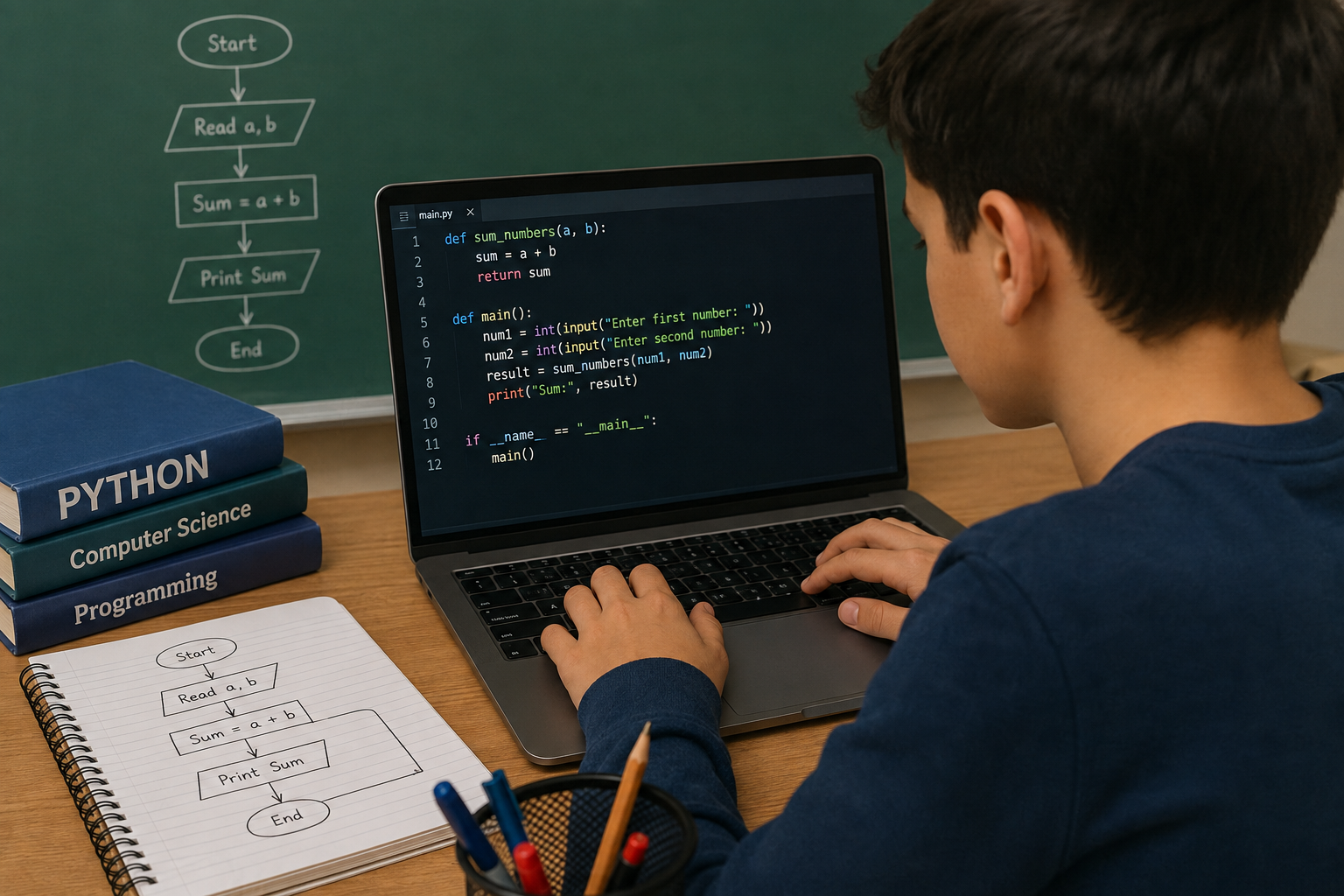
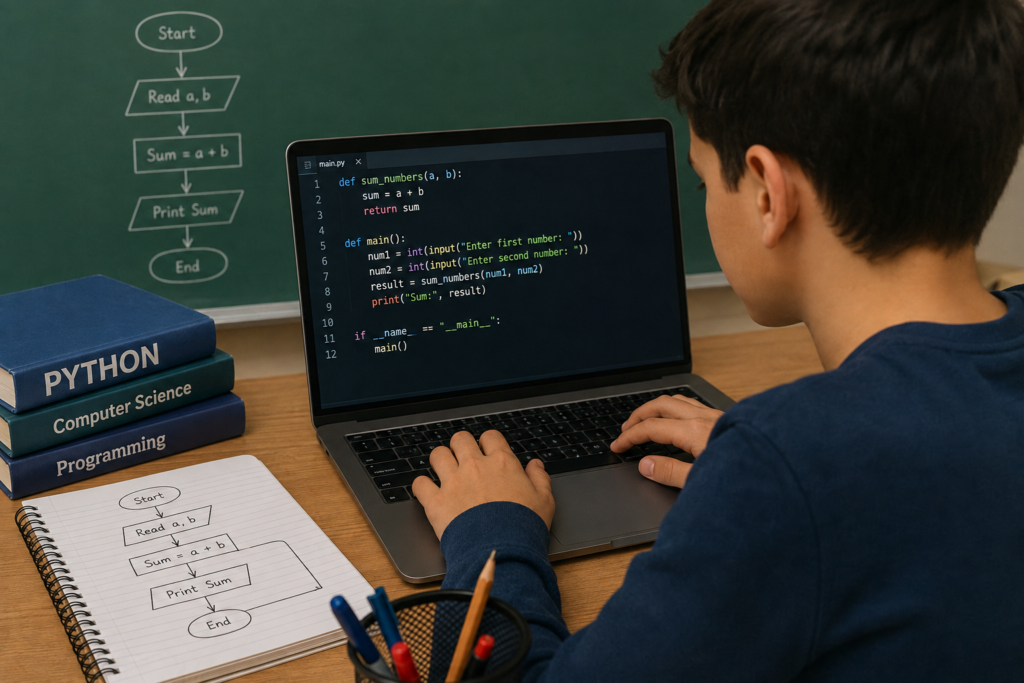
For example, if a student wants to create a simple program that calculates the total cost of several products, the student must determine what information the program needs, how the calculations should work, and what result should be displayed. Each step requires logical thinking.
Over time, students become more comfortable with analyzing situations and making decisions based on facts. This logical approach can also help them understand subjects such as mathematics, science, and technology.
Coding Helps Students Break Large Problems Into Smaller Tasks
Large problems can sometimes feel difficult because they contain many different parts. Coding teaches students that a complicated problem can be divided into smaller and more manageable tasks.
Suppose students are asked to create a simple educational game. Instead of trying to build the entire game at once, they can divide the project into different tasks. They can first create the questions, then add scoring, then create the user interface, and finally test the complete project.
This approach teaches students how to manage complex problems step by step. The same skill can be useful when completing school projects, preparing assignments, or dealing with challenges in daily life.
Coding Encourages Creativity
Many people think coding is only about mathematics and logic, but coding also encourages creativity. Students can use programming to create websites, games, animations, mobile applications, and educational projects.
When students write code, they often have several possible ways to solve a problem. They can experiment with different ideas and decide which solution works best. This gives them the freedom to think creatively while still following logical rules.
Creative problem solving is an important skill because real world problems rarely have only one possible answer. Coding gives students an environment where they can experiment, make changes, and develop their own solutions.
Debugging Builds Patience
Debugging is an important part of learning coding. A program may contain errors that prevent it from working properly. Students need to find these errors and correct them.
At first, debugging can be frustrating. However, students gradually learn that mistakes are a normal part of the learning process. Instead of giving up when something does not work, they learn to examine the code, identify the problem, test possible solutions, and try again.
This develops patience and persistence. These qualities are important for problem solving because many difficult problems cannot be solved immediately. Students who learn to continue working after mistakes can become more confident learners.
Coding Improves Analytical Skills
Analytical thinking involves examining information carefully and understanding how different parts are connected. Coding provides students with regular opportunities to practice this skill.
When a program produces an unexpected result, students need to analyze the code and determine why the result is different from what they expected. They may need to check variables, conditions, calculations, or instructions.
This process teaches students to pay attention to details. Strong analytical skills can help students understand difficult questions and make better decisions in different areas of education.
Coding Teaches Students to Learn From Mistakes
Mistakes are an important part of programming. Even experienced programmers make errors in their code. For students, this can create a valuable learning experience.
When a student makes a mistake in a program, the error provides information about what needs to be changed. Students can learn from that information and improve their work.
This creates a positive attitude toward mistakes. Instead of seeing an error as a failure, students can understand it as an opportunity to learn something new. This mindset can improve confidence and encourage students to take on more challenging tasks.
Coding Develops Critical Thinking
Critical thinking is the ability to examine information, compare options, and make reasonable decisions. Coding supports critical thinking because students constantly need to decide how a problem should be solved.
For example, students may discover that there are several ways to write a program. They need to compare these methods and choose the one that is simple, efficient, and suitable for the task.
Through these decisions, students learn to evaluate different solutions rather than accepting the first idea that comes to mind. This skill can be valuable in academic work and future professional environments.
Coding Improves Decision Making
Programming often involves making decisions. Students use conditions to tell a computer what should happen when certain situations occur.
For example, a student might create a program that checks whether a number is positive, negative, or zero. The program needs clear instructions for each possible situation.
Working with these types of problems helps students understand how decisions can lead to different results. This can improve their ability to think about consequences and select appropriate solutions.
Coding Supports Mathematical Problem Solving
Coding and mathematics are closely connected. Programming often requires students to work with numbers, patterns, measurements, calculations, and formulas.
Students can use coding to solve mathematical problems more practically. Instead of only solving a problem on paper, they can create a program that performs calculations automatically.
This can make mathematical concepts more interesting and easier to understand. Students can also learn how mathematical thinking can be applied to real world situations.
Coding Encourages Experimentation
Another important way coding develops problem solving skills is through experimentation. Students can change their code and observe what happens.
For example, they might change a value, modify an instruction, or use a different method to complete a task. By comparing results, students learn how small changes can affect the final outcome.
This hands on learning experience helps students understand cause and effect. It also encourages curiosity and makes learning more active.
Coding Builds Confidence
Students can become more confident when they successfully solve coding problems. Completing a project gives them a sense of achievement and shows them that difficult challenges can be overcome with effort and practice.
Confidence is important because students who believe they can solve problems are more likely to attempt challenging tasks. Coding provides many opportunities for students to experience this progress.
A student may begin with simple programs and gradually move toward more complex projects. Each successful project can increase confidence and motivation.
Coding Helps With Real World Problems
The problem solving skills developed through coding are not limited to computers. Students can apply these skills to many real world situations.
Planning a project, organizing information, managing time, comparing options, and finding solutions all require problem solving. Coding teaches students to approach these situations systematically.
This makes coding valuable even for students who do not plan to become professional programmers. The thinking skills developed through programming can support many different careers and areas of life.
The Role of Teachers in Teaching Coding
Teachers can play an important role in helping students develop problem solving skills through coding. Instead of focusing only on programming syntax, teachers can give students practical challenges that require them to think independently.
Project based learning can be particularly effective. Students can create simple games, websites, calculators, quizzes, or educational applications. These projects give students opportunities to identify problems, plan solutions, write code, test their ideas, and improve their results.
Teachers can also encourage students to work together. Group coding projects can develop communication, teamwork, and collaborative problem solving skills.
Conclusion
Coding helps students develop problem solving skills by teaching them how to think logically, analyze information, break large problems into smaller tasks, experiment with solutions, and learn from mistakes. It also improves creativity, critical thinking, patience, decision making, and confidence.
The importance of coding in education goes beyond learning programming languages. It teaches students a structured way to approach challenges and find practical solutions. As technology continues to influence education and the workplace, these skills are becoming increasingly valuable.
Students who learn coding can develop a mindset that encourages curiosity, persistence, and independent thinking. Whether they become programmers, engineers, teachers, business professionals, designers, or work in another field, the problem solving skills gained through coding can help them handle challenges more effectively. For this reason, coding should be considered an important part of modern education and student skill development.