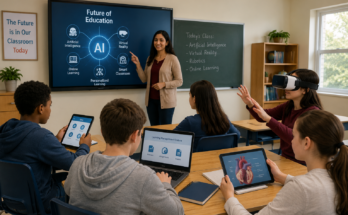
Education has changed a lot with the growth of smartphones, tablets, and digital learning tools. Today, students can learn almost anywhere with the help of educational apps. These apps make studying easier, more flexible, and more interesting. Instead of depending only on textbooks and classroom lectures, students can use technology to understand difficult topics, practice important skills, organize their study time, and prepare for exams.
The best educational apps for students are designed to support different learning needs. Some apps help students learn languages, while others are useful for mathematics, science, writing, note taking, and time management. Choosing the right educational apps can help students become more independent and confident learners.
Why Educational Apps Are Important for Students
Educational apps provide students with easy access to learning resources. A student can use an app to review a lesson, watch an educational video, complete practice questions, or research a topic. This flexibility is especially useful for students who want to learn at their own pace.
Another important benefit of educational apps is interactive learning. Traditional learning can sometimes become boring when students only read books or listen to lectures. Educational apps often include quizzes, exercises, videos, games, and progress tracking features. These features can make learning more enjoyable and encourage students to practice regularly.
Educational apps can also help students develop digital skills. Since technology is an important part of modern education and professional life, learning how to use digital tools responsibly is valuable for students.
1. Google Classroom
Google Classroom is one of the most useful educational apps for students. It allows teachers to share assignments, study materials, announcements, and other learning resources in one place.
Students can use Google Classroom to check their assignments, submit completed work, read teacher instructions, and keep track of deadlines. It can reduce confusion because important class information is available digitally.
Google Classroom is particularly helpful for online learning and blended education. Students can access their classroom materials from different devices and stay connected with their teachers.
2. Khan Academy
Khan Academy is a popular learning platform that provides free educational resources for students. It covers subjects such as mathematics, science, economics, history, and many other areas.
One of the main advantages of Khan Academy is its simple approach to difficult subjects. Students can watch lessons, complete practice exercises, and review topics they do not understand.
The platform is especially useful for students who need extra practice outside the classroom. Instead of moving forward without understanding a topic, students can review the lesson and practice until they feel more confident.
3. Quizlet
Quizlet is an excellent educational app for students who want to improve memory and prepare for exams. It allows users to create digital flashcards and study sets.
Students can use Quizlet to learn vocabulary, definitions, formulas, important facts, and other information. Flashcards can make revision faster because students can focus on key points instead of reading an entire textbook.
Quizlet is also useful for language learning. Students can create vocabulary lists and practice unfamiliar words repeatedly. Regular revision can help improve memory and make exam preparation more effective.
4. Duolingo
Duolingo is one of the best educational apps for students interested in learning a new language. The app offers lessons in a simple and interactive format.
Students can practice vocabulary, grammar, pronunciation, reading, and listening. Short lessons make it easier to include language learning in a busy study schedule.
The interactive nature of Duolingo can also encourage students to practice every day. Learning a language requires consistency, and an app can make regular practice easier to maintain.
5. Microsoft OneNote
Taking good notes is an important part of academic success. Microsoft OneNote is a useful app that helps students organize their notes digitally.
Students can create separate notebooks for different subjects and add written notes, pictures, links, drawings, and other information. This can make study materials easier to organize and review.
OneNote is especially helpful for students who have many subjects. Instead of carrying several notebooks, students can keep their study notes in one digital location.
6. Grammarly
Writing skills are important for students because assignments, essays, reports, and applications often require clear and correct writing. Grammarly can help students identify grammar, spelling, punctuation, and clarity problems.
Students can use it while writing assignments and reviewing their work. It can help them notice mistakes they may not recognize themselves.
However, students should not depend completely on writing tools. They should understand why a correction is suggested and continue improving their own grammar and writing skills.
7. Photomath
Mathematics can be challenging for many students, especially when solving complex equations. Photomath is an educational app that can help students understand mathematical problems.
Students can enter or scan a mathematics problem and receive explanations and steps. This can be useful when students are practicing homework and need help understanding the process.
The best way to use such an app is as a learning assistant rather than simply copying answers. Students should study the steps and try similar problems independently.
8. Coursera
Coursera provides access to online courses from universities and educational institutions. It can be useful for older students, college students, and learners who want to explore subjects beyond their regular curriculum.
Students can find courses related to technology, business, science, communication, programming, and many other fields. These courses can help learners develop knowledge and skills that may be useful for higher education and future careers.
Online courses also encourage students to become independent learners because they must manage their own time and complete lessons regularly.
9. TED
TED is another useful educational resource for students. TED Talks cover a wide range of subjects, including science, technology, education, creativity, leadership, and society.
Students can watch talks to learn about new ideas and different perspectives. TED can also help students improve listening skills and become familiar with different speaking styles.
Teachers and students can use educational talks as additional learning resources when studying a particular topic.
10. Forest
Studying for long periods can be difficult when students have access to social media, games, and other distractions. Forest is a productivity app designed to encourage focused study sessions.
The basic idea is simple. Students start a focus session and avoid using their phone for the selected period. A virtual tree grows during the session, encouraging users to remain focused.
Time management apps like Forest can help students build better study habits. When combined with a realistic study schedule, they can make learning more organized.
Benefits of Using Educational Apps
The best educational apps for students offer several important benefits. First, they provide convenient access to learning resources. Students can study at home, in school, or while traveling.
Second, educational apps support personalized learning. Every student learns differently. Some students understand concepts quickly, while others need more practice. Apps can allow students to repeat lessons and exercises according to their individual needs.
Third, these apps can make learning more interactive. Videos, quizzes, flashcards, games, and practice activities can keep students engaged.
Another major benefit is better organization. Apps for notes, assignments, calendars, and productivity can help students manage their academic responsibilities.
Educational apps can also save time. Instead of searching through multiple books and websites, students can use specialized apps to find useful learning materials quickly.
How to Choose the Best Educational Apps
Students should not download every educational app they find. It is better to choose apps according to specific learning goals.
First, students should consider the subject they want to improve. A mathematics app may be useful for one student, while a language learning app may be more valuable for another.
Second, students should check whether an app provides reliable and high quality information. Educational content should be accurate and appropriate for their learning level.
Students should also consider ease of use. A complicated app can become frustrating and waste time. A good educational app should be simple to navigate and provide useful features.
Privacy and security are also important. Students should understand what information an app collects and avoid sharing unnecessary personal information.
Finally, students should consider whether the app actually improves their learning. An attractive design is useful, but educational value should always be the main priority.
Tips for Using Educational Apps Effectively
Using educational apps does not automatically guarantee better grades. Students need to use these tools wisely.
One useful approach is to create a study routine. Students can choose specific times for using educational apps and avoid unnecessary screen time.
Students should also combine apps with traditional learning methods. Reading textbooks, writing notes, practicing questions, participating in class, and discussing topics with teachers and classmates are still important.
Another good habit is active learning. Instead of watching lessons without thinking, students should take notes, answer questions, solve problems, and explain concepts in their own words.
Students should also review their progress regularly. If an app shows weak areas, students can spend more time practicing those topics.
Conclusion
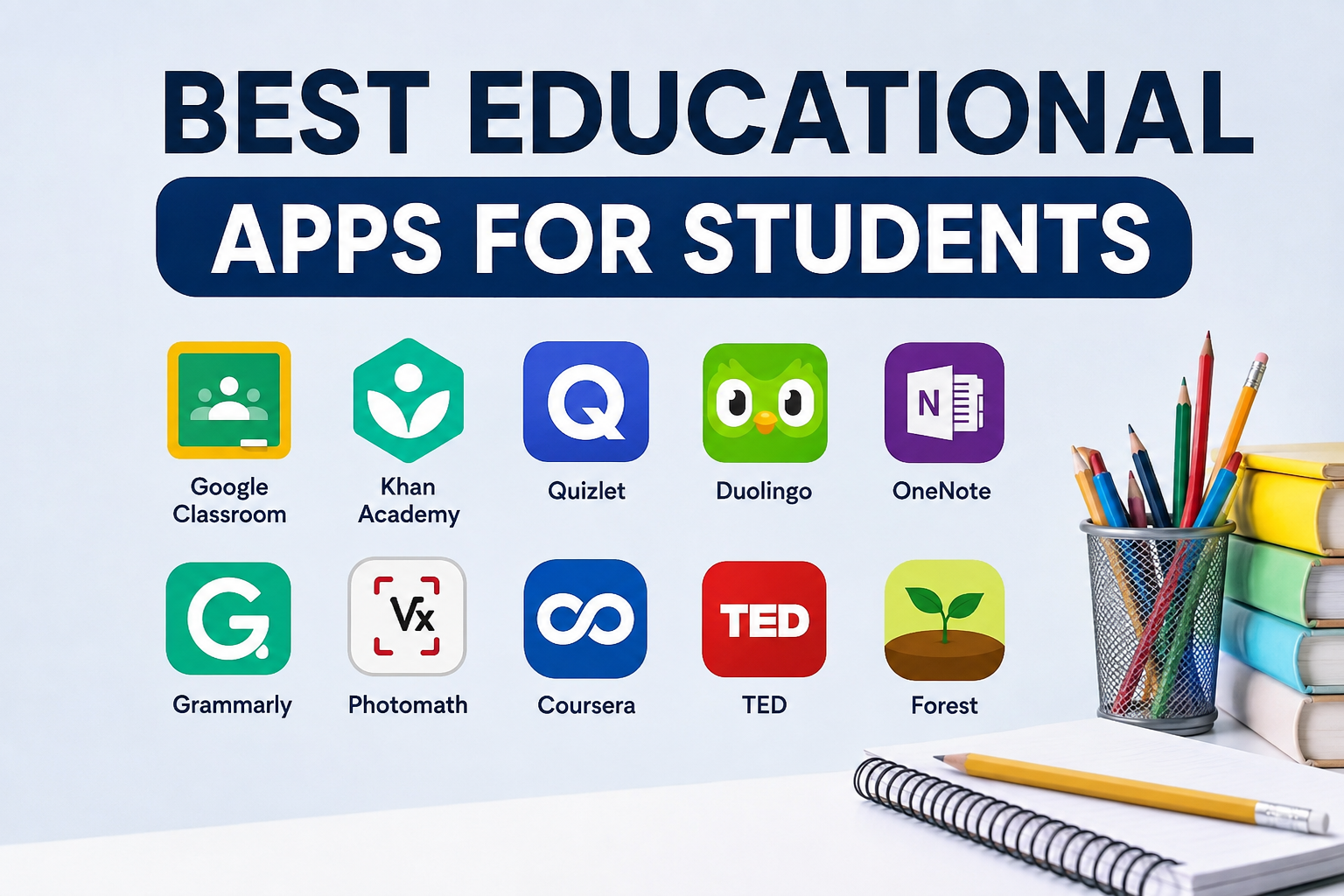
The best educational apps for students can make learning more convenient, interactive, and personalized. Apps such as Google Classroom, Khan Academy, Quizlet, Duolingo, Microsoft OneNote, Grammarly, Photomath, Coursera, TED, and Forest can support different parts of a student’s academic journey.
However, educational apps should be used as learning tools rather than replacements for teachers, books, and personal effort. The most successful students use technology with discipline and combine digital resources with effective study habits.
As education continues to become more digital, educational apps will remain valuable tools for students. By choosing reliable apps and using them consistently, students can improve their knowledge, develop useful skills, stay organized, and become more confident independent learners.