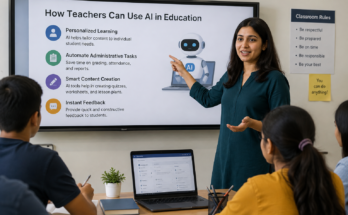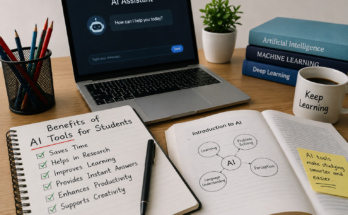
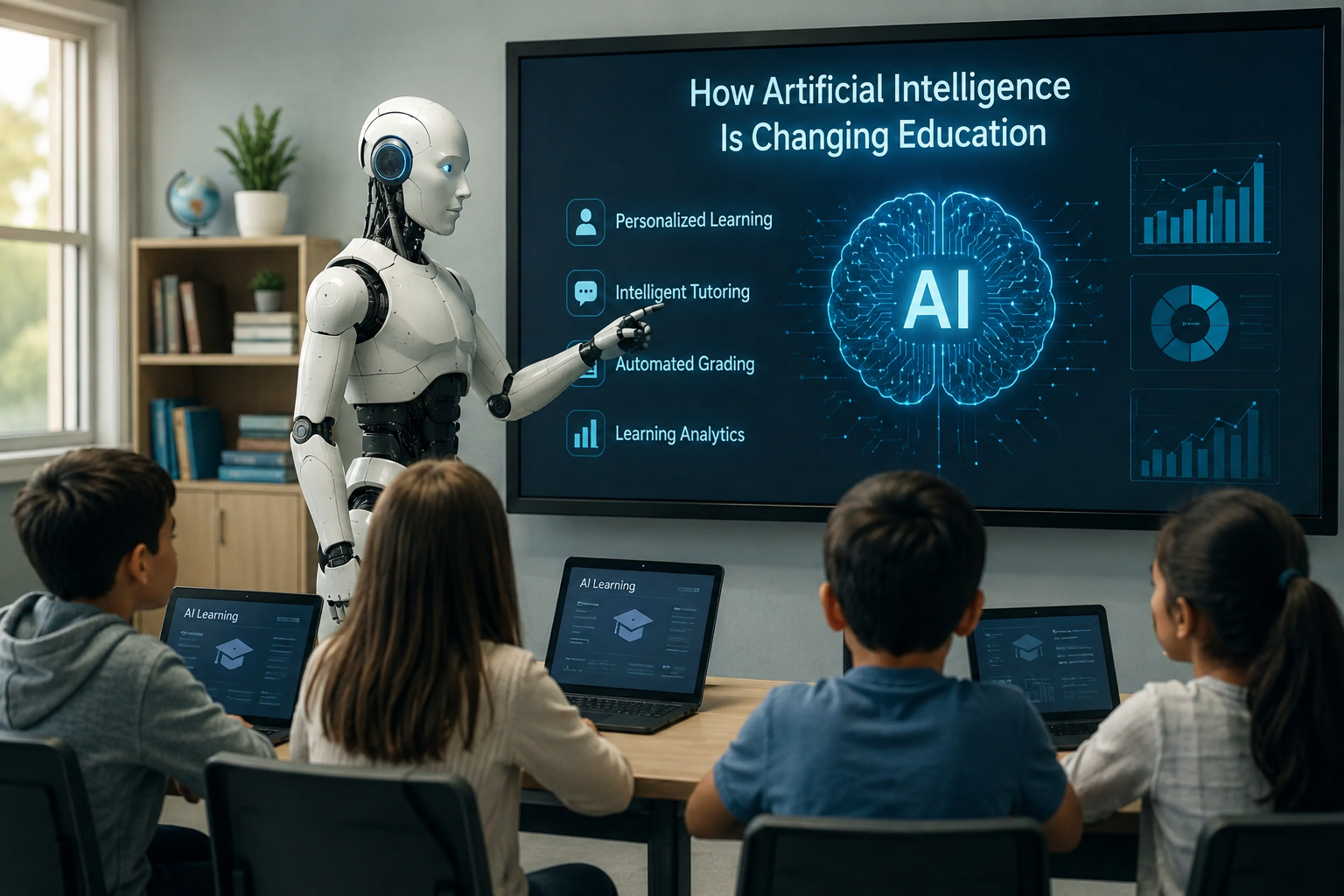
Artificial intelligence is changing education in many important ways. From personalized learning to automated assessments, AI is helping students and teachers make the learning process more effective and flexible. Educational institutions are using artificial intelligence tools to improve teaching methods, provide faster support, and create better learning experiences. As technology continues to develop, the role of AI in education is expected to become even more important.
The growth of artificial intelligence in education is not only about using advanced software. It is also about changing the way students learn, teachers teach, and schools manage educational activities. AI can analyze information, understand learning patterns, provide useful recommendations, and support students according to their individual needs. This makes it one of the most influential technologies in modern education.
What Is Artificial Intelligence in Education
Artificial intelligence in education refers to the use of intelligent computer systems and software to support teaching and learning. These systems can perform tasks that normally require human intelligence, such as analyzing information, answering questions, recognizing patterns, and providing recommendations.
AI education tools can be used in online learning platforms, virtual classrooms, educational applications, language learning programs, and school management systems. Students can use AI tools to understand difficult topics, practice their skills, and receive instant feedback. Teachers can also use AI to organize lessons, analyze student performance, and reduce repetitive administrative work.
Personalized Learning With Artificial Intelligence
One of the biggest benefits of artificial intelligence in education is personalized learning. Every student has different abilities, interests, and learning speeds. Traditional teaching methods may not always provide enough individual attention to every learner.
AI can analyze a student’s performance and identify areas where the student needs more practice. For example, if a student is struggling with mathematics, an AI powered learning platform can recommend additional exercises and explanations. If another student understands the topic quickly, the system can provide more advanced material.
This approach allows students to learn at their own pace. Personalized education can also increase student confidence because learners receive support based on their individual needs.
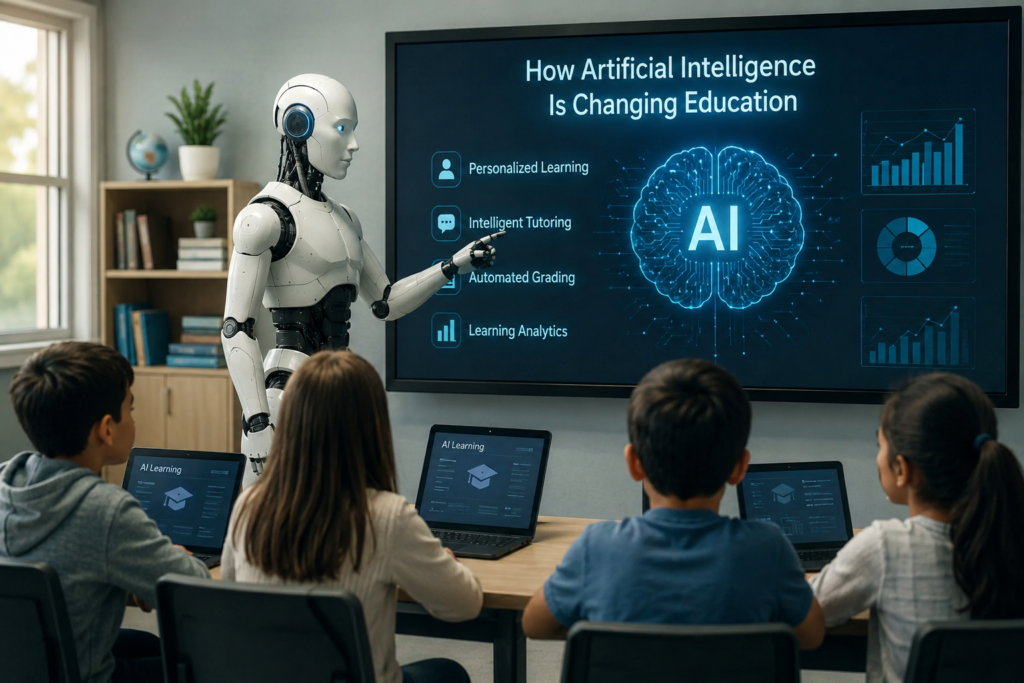
AI Helps Teachers Save Time
Teachers spend a significant amount of time preparing lessons, checking assignments, creating questions, and managing student information. Artificial intelligence can help reduce some of these repetitive tasks.
AI tools can assist with creating educational materials, generating practice questions, organizing information, and analyzing assessments. This does not mean that teachers are no longer needed. Instead, AI can give teachers more time to focus on important human activities such as explaining concepts, motivating students, and providing personal guidance.
By reducing administrative tasks, artificial intelligence can make teaching more efficient and productive.
Better Student Support
Students often have questions while studying outside regular classroom hours. In a traditional classroom, a teacher may not always be available to answer every question immediately. AI powered educational assistants can provide quick responses to common questions.
Students can use AI based systems to ask about difficult concepts, request examples, practice a language, or review lessons. This instant support can make online education more convenient.
However, students should use AI as a learning assistant rather than depending completely on it. Understanding the subject, thinking independently, and developing problem solving skills remain essential parts of education.
Artificial Intelligence and Online Education
Online education has grown rapidly, and artificial intelligence is making digital learning platforms more advanced. AI can help online learning systems recommend courses, track student progress, and identify areas that require additional attention.
For example, an online education platform can study how a learner interacts with different lessons. If the learner repeatedly struggles with a particular topic, the system can suggest another explanation or additional practice.
AI can also help improve virtual classrooms by supporting automated feedback and interactive learning activities. These features can make online education more engaging and useful for students.
AI in Assessment and Feedback
Assessment is an important part of education because it helps teachers understand student progress. Artificial intelligence can support the assessment process by analyzing answers and identifying common mistakes.
AI systems can provide immediate feedback in certain types of assignments and practice activities. Students do not always have to wait for a teacher to check every exercise before discovering their mistakes.
Fast feedback can help students correct problems while the information is still fresh in their minds. It can also help teachers identify common weaknesses across a group of students and adjust their teaching strategies.
At the same time, human teachers remain important for evaluating complex work that requires creativity, judgment, and deeper understanding.
AI Supports Language Learning
Artificial intelligence is also changing the way students learn languages. AI powered language learning applications can provide pronunciation practice, vocabulary exercises, grammar support, and conversational activities.
Students can practice speaking with digital systems without feeling embarrassed about making mistakes in front of others. AI can provide feedback and suggest areas for improvement.
This can be especially useful for learners who want to practice regularly. With consistent use, AI supported language learning can help students develop stronger communication skills.
Improved Accessibility in Education
Another important advantage of artificial intelligence is its potential to make education more accessible. Students with different learning needs can benefit from technologies that provide alternative ways to understand educational content.
AI supported tools can assist with speech recognition, text conversion, language support, and personalized content. These technologies can help students interact with educational material in ways that suit their needs.
Accessibility is an important part of modern education because every learner should have an opportunity to participate and learn effectively.
AI Encourages Interactive Learning
Traditional learning can sometimes become repetitive when students only read textbooks or listen to lectures. Artificial intelligence can make learning more interactive through simulations, intelligent tutoring systems, educational games, and virtual activities.
Interactive learning gives students opportunities to practice concepts instead of only memorizing information. For example, students studying science can use digital simulations to explore scientific ideas. Students learning business can work with virtual scenarios and make decisions based on changing situations.
These experiences can make difficult subjects easier to understand and more interesting.
Challenges of Artificial Intelligence in Education
Although AI offers many benefits, there are also challenges that schools, teachers, and students need to consider. One major concern is academic honesty. Students may use AI tools to complete assignments without actually learning the subject.
Another concern is privacy. Educational platforms may collect large amounts of student information, so schools need strong policies for protecting personal data.
There is also the risk of inaccurate information. AI systems can sometimes provide incorrect or incomplete answers. Students should therefore learn how to check information and use reliable sources.
Teachers also need proper training to use artificial intelligence effectively. Technology should support good teaching rather than replace human interaction.
The Future of AI in Education
The future of artificial intelligence in education looks promising. As AI technology becomes more advanced, educational platforms may become better at understanding individual learning needs and providing personalized support.
Future classrooms may combine human teaching with intelligent digital tools. Teachers could use AI to analyze learning data while spending more time working directly with students. Students may receive personalized learning paths based on their strengths, weaknesses, interests, and goals.
However, the success of AI in education will depend on responsible use. Schools should create clear guidelines for AI use and teach students how to use technology ethically. Human judgment, creativity, communication, and critical thinking should remain central to education.
Conclusion
Artificial intelligence is changing education by making learning more personalized, accessible, interactive, and efficient. AI can help students receive immediate support, practice skills, and learn according to their individual needs. It can also help teachers save time, understand student performance, and improve educational planning.
Despite its advantages, artificial intelligence should not replace teachers or independent thinking. The best approach is to combine advanced technology with human knowledge, creativity, and guidance. When used responsibly, AI in education can create better learning opportunities and prepare students for a technology driven future.
As artificial intelligence continues to develop, its influence on education will continue to grow. Schools, teachers, and students who learn how to use AI effectively can benefit from its powerful educational possibilities while maintaining the human values that make learning meaningful.