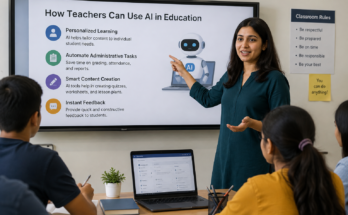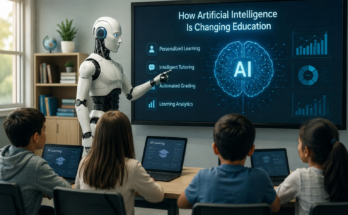
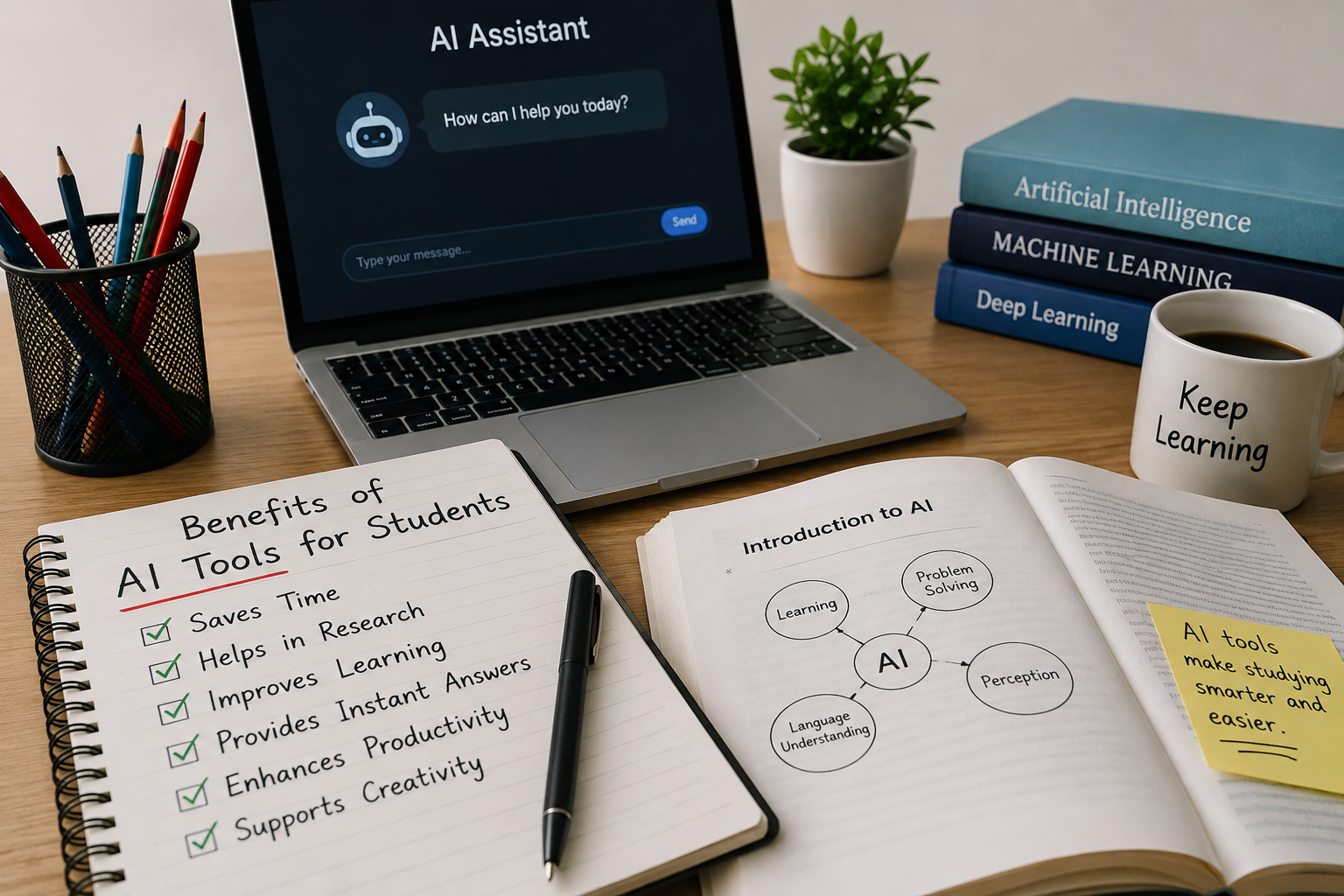
Artificial intelligence is becoming an important part of modern education. Students today can use AI tools to understand difficult topics, organize their studies, improve their writing, and prepare for exams. These tools are changing the way students learn by providing quick assistance and personalized learning support. When used responsibly, AI tools for students can make education more flexible, engaging, and productive.
The benefits of AI tools for students are not limited to completing academic tasks. Artificial intelligence can also help learners develop better study habits, manage their time, discover useful information, and improve their confidence. From AI writing assistants to intelligent tutoring platforms, students have access to many digital resources that can support their educational journey.
Personalized Learning Experience
One of the biggest benefits of AI tools for students is personalized learning. Every student has a different learning speed, level of understanding, and preferred way of studying. Traditional classroom teaching may not always provide enough individual attention to every learner.
AI powered educational tools can adjust learning materials according to a student’s needs. If a student struggles with mathematics, an AI tool can provide additional explanations and practice questions. If another student understands a topic quickly, the tool can provide more advanced exercises.
This personalized approach allows students to focus on areas where they need the most improvement. As a result, learning can become more effective and comfortable.
Quick Help With Difficult Topics
Students often face difficult subjects and complicated concepts. Sometimes they may hesitate to ask questions in front of classmates. AI tools can provide immediate explanations and allow students to ask questions without feeling embarrassed.
For example, a student studying science can ask an AI tool to explain a complex concept in simple language. The student can also request examples, step by step explanations, or additional practice questions.
This instant access to educational support can help students overcome learning difficulties more quickly.
Improved Research Skills
Research is an important part of education. Students need to find information, understand different ideas, compare sources, and organize their findings. AI tools can assist with many parts of this process.
AI can help students generate research ideas, identify important points, create questions, and organize information. It can also help learners understand complicated information by presenting it in a simpler format.
However, students should always verify important information through reliable academic sources. AI should be used as a learning assistant rather than the only source of information.
Better Writing and Grammar
Writing is another area where AI tools can provide valuable support. Students can use AI writing tools to identify grammar mistakes, improve sentence structure, and make their writing easier to understand.
These tools can help students learn from their mistakes instead of simply correcting them. For example, an AI assistant can explain why a sentence is grammatically incorrect and suggest a better structure.
Students can also use AI to improve vocabulary and understand unfamiliar words. This can gradually strengthen their communication skills and make academic writing more effective.
Support for Exam Preparation
Exam preparation can be stressful for many students. AI tools can make the preparation process more organized by creating practice questions, quizzes, summaries, and revision materials.
A student can provide a topic and ask an AI tool to create questions based on that topic. The student can then answer the questions and identify areas that require additional study.
AI can also help create revision schedules. Instead of studying everything at the last minute, students can organize their subjects into smaller study sessions. This can make exam preparation more manageable and productive.
Saves Time
Time management is one of the major challenges faced by students. They have to balance classes, homework, assignments, projects, revision, and personal activities.
AI tools can help reduce the time spent on repetitive educational tasks. For example, students can use AI to summarize long information, organize notes, generate study questions, or create outlines for projects.
Saving time does not mean avoiding learning. Instead, students can use the extra time to understand concepts more deeply and practice their skills.
Helps Students Stay Organized
Organization plays an important role in academic success. Students may have multiple assignments and deadlines at the same time. AI based productivity tools can help them organize their academic responsibilities.
Students can use AI to create study plans, divide large projects into smaller tasks, and prioritize important activities. Some tools can also help students create reminders and structured schedules.
When academic work is organized properly, students may feel less overwhelmed and have a clearer understanding of what they need to complete.
Encourages Independent Learning
AI tools can encourage students to become more independent learners. Instead of waiting for a teacher or classmate to explain every problem, students can explore topics on their own.
For example, a student interested in programming can use AI to understand coding concepts and practice simple exercises. A student learning a new language can use AI to practice vocabulary, grammar, and conversations.
This type of self directed learning can encourage curiosity and motivate students to explore subjects beyond their regular classroom lessons.
Improves Language Learning
Learning a new language requires regular practice. AI tools can provide students with opportunities to practice reading, writing, vocabulary, pronunciation, and conversation.
Students can use AI to create conversations in a target language and receive feedback on their sentences. They can also ask for explanations of grammar rules and examples of common expressions.
This makes language learning more interactive and gives students an opportunity to practice whenever they have time.
Makes Learning More Engaging
Traditional study methods can sometimes become repetitive. AI tools can introduce different ways of learning and make educational activities more interactive.
Students can ask for examples related to their interests, practice questions at different difficulty levels, or explore topics through conversations. Interactive learning can make students more interested in their studies.
When students are actively involved in learning, they may develop better understanding and stronger motivation.
Helps Students With Accessibility
AI technology can also support students who have different learning needs. Tools that provide text to speech, speech to text, language translation, simplified explanations, and other features can make educational content easier to access.
For students who find reading large amounts of text difficult, AI can help summarize important information. Students who have difficulty expressing ideas in writing may use AI assistance to organize their thoughts before creating their own final work.
These features can help create a more inclusive learning environment.
Develops Digital Skills
Digital skills are becoming increasingly important in education and employment. By using AI tools responsibly, students can become familiar with modern technology and learn how digital systems can support different tasks.
Students can develop skills such as writing effective instructions for AI, evaluating information, checking accuracy, organizing digital content, and using technology to solve problems.
These abilities can be valuable beyond school or university because many modern workplaces are adopting artificial intelligence.
Provides Instant Feedback
Feedback helps students understand their strengths and weaknesses. AI tools can provide immediate feedback on writing exercises, practice questions, and other learning activities.
Instead of waiting for the next class, students can identify mistakes and work on them immediately. This can make the learning process faster and more interactive.
Instant feedback is particularly useful when students are practicing repeatedly because they can learn from mistakes while the topic is still fresh in their minds.
Supports Creativity
AI tools can also help students develop creative ideas. They can be used for brainstorming topics, generating questions, exploring different perspectives, and planning projects.
For example, a student preparing a presentation can use AI to brainstorm possible themes and organize ideas. The student can then develop those ideas independently and create an original presentation.
AI should support creativity rather than replace it. Students should use their own imagination, opinions, and critical thinking when completing creative work.
Encourages Critical Thinking
Although AI provides quick answers, students should not accept every answer without checking it. Learning to evaluate AI generated information can actually encourage critical thinking.
Students can compare AI responses with textbooks, academic websites, research papers, and teacher guidance. They can identify incorrect information and think about why an answer may be unreliable.
This teaches students an important modern skill: using technology while maintaining independent judgment.
Responsible Use of AI Tools
The benefits of AI tools for students are strongest when these technologies are used responsibly. Students should not depend completely on AI to complete their assignments or avoid learning the underlying concepts.
AI generated information can sometimes contain errors. Students should verify important facts and follow their school’s or university’s rules regarding artificial intelligence.
Students should also protect their personal information and avoid entering sensitive details into unknown AI platforms. Responsible use means treating AI as a helpful educational assistant rather than a replacement for teachers, textbooks, or personal effort.
Conclusion
The benefits of AI tools for students are becoming increasingly clear as artificial intelligence continues to influence modern education. AI can provide personalized learning, quick explanations, writing support, exam preparation, better organization, research assistance, and instant feedback.
These tools can help students save time while improving their learning experience and developing important digital skills. However, technology is most useful when students combine it with critical thinking, creativity, independent study, and guidance from teachers.
The future of education will likely involve greater cooperation between students, teachers, and artificial intelligence. By using AI tools wisely and responsibly, students can take advantage of modern technology while continuing to build the knowledge and skills they need for academic and professional success.