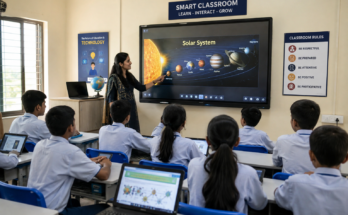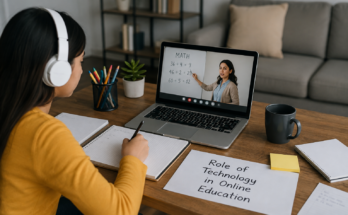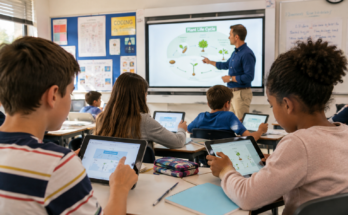
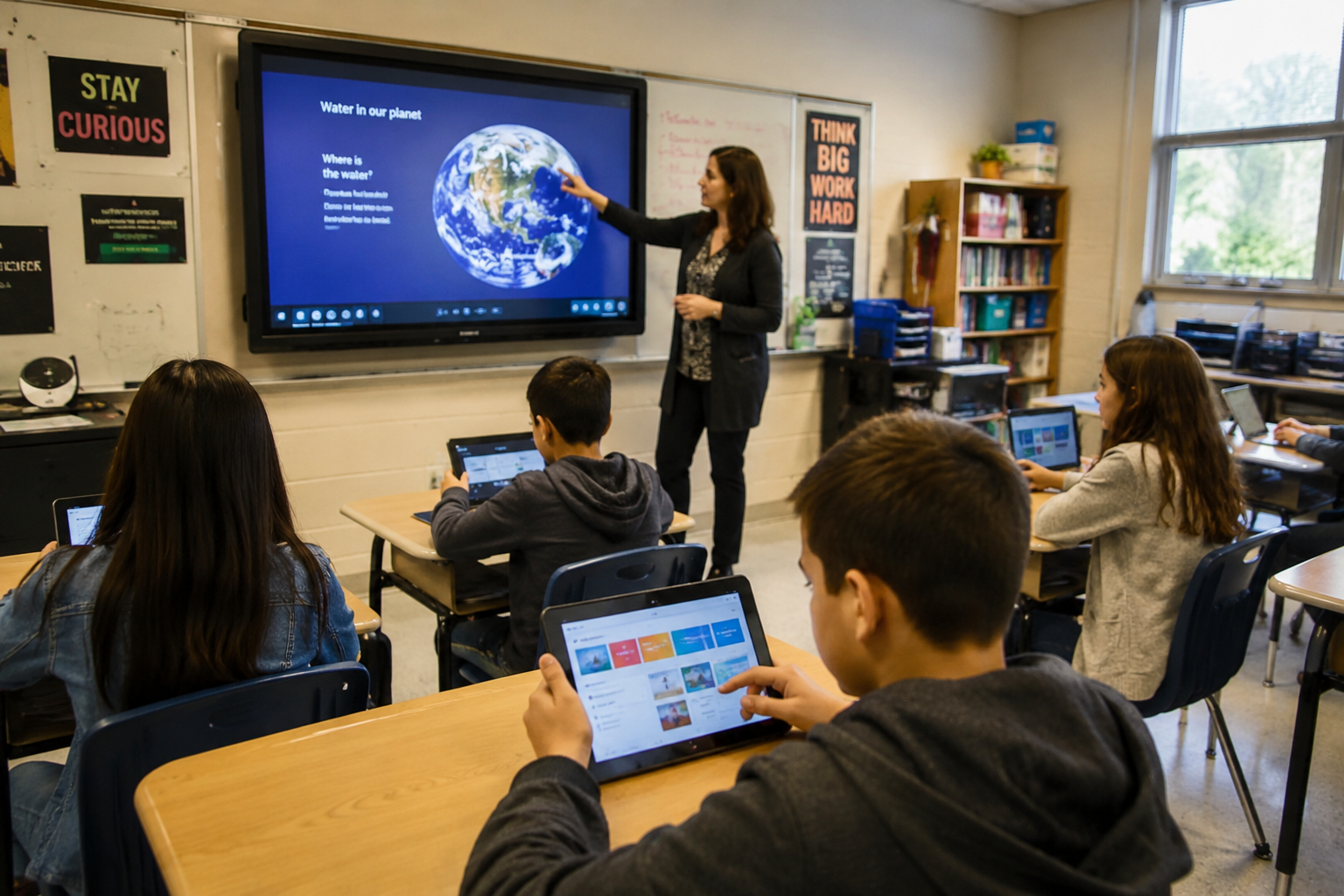
Technology has become an important part of everyday life, and its influence on education is growing rapidly. Classrooms today are very different from classrooms of the past. Students can access information within seconds, attend online classes from home, use educational applications for practice, and communicate with teachers through digital platforms. These changes are making education more flexible, accessible, interactive, and personalized.
The growth of educational technology has also changed the way teachers prepare lessons and evaluate student performance. Instead of depending only on textbooks and traditional lectures, teachers can use videos, presentations, online quizzes, virtual classrooms, digital libraries, and artificial intelligence tools to support learning. As technology continues to develop, modern education is becoming more connected with digital tools and resources.
Technology Makes Learning More Accessible
One of the biggest advantages of technology in education is improved access to learning materials. In the past, students often depended on school libraries and printed textbooks to find information. Today, learners can access thousands of educational resources through computers, tablets, and smartphones.
Online libraries, educational websites, digital books, recorded lectures, and learning platforms allow students to study whenever they have time. This is especially useful for students who live far from educational institutions or cannot attend traditional classes regularly.
Online education has also made it possible for students to learn from teachers and institutions in different parts of the world. A student can take an online course from an international university without traveling to another country. This has created new opportunities for people who want to improve their education and professional skills.
Online Learning Is Changing the Classroom
Online learning has become one of the most important developments in modern education. Virtual classrooms allow teachers and students to communicate through video meetings, discussion forums, messaging systems, and digital assignments.
Students can attend lessons from home and review recorded classes when they need additional help. This flexibility is valuable for students who have busy schedules or different learning needs.
Online education also supports blended learning, which combines traditional classroom teaching with digital education. For example, a teacher may explain a topic in class and then provide online videos, quizzes, and reading materials for additional practice. This approach gives students more ways to understand and review the subject.
Interactive Learning Improves Student Engagement
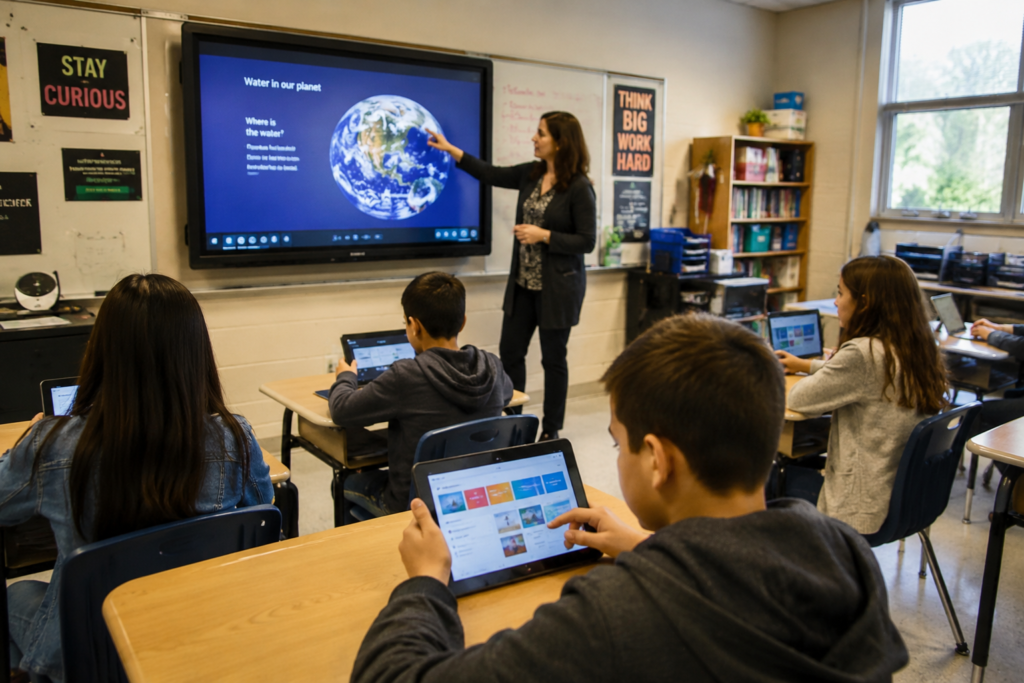
Technology can make education more interesting and interactive. Traditional lectures may sometimes make it difficult for students to remain focused, especially when complex concepts are being discussed. Digital tools can present information through animations, videos, simulations, graphics, and interactive activities.
For example, science students can watch digital demonstrations of experiments, while geography students can explore interactive maps. History students can view virtual tours of historical locations, and mathematics students can use educational applications to practice difficult problems.
Interactive learning encourages students to participate rather than simply listen. When students actively engage with educational content, they may develop better understanding and stronger interest in the subject.
Personalized Education Through Technology
Every student learns differently. Some students understand new concepts quickly, while others need additional explanation and practice. Technology can help create a more personalized learning experience.
Many educational platforms can provide activities based on a student’s progress. If a learner struggles with a particular topic, the platform may provide additional exercises or simpler explanations. Students who understand a subject quickly can move toward more advanced material.
Personalized learning can help students study at their own pace. Instead of forcing every learner to follow exactly the same schedule, digital education tools can provide greater flexibility according to individual needs.
Artificial Intelligence in Education
Artificial intelligence is becoming an important part of modern education. AI powered tools can help students with research, writing, language learning, problem solving, and practice. Teachers can also use artificial intelligence to prepare lesson ideas, organize educational materials, create quizzes, and analyze learning progress.
AI can provide quick feedback and help students identify areas where they need improvement. Language learning applications, for example, can help learners practice vocabulary, grammar, pronunciation, and communication skills.
However, artificial intelligence should support education rather than completely replace teachers. Teachers provide human guidance, emotional support, creativity, classroom management, and personal understanding that technology cannot fully reproduce.
Digital Skills Are Becoming Essential
Modern education is not only about learning traditional academic subjects. Students also need digital skills because technology is an important part of higher education and professional life.
Students should learn how to use computers, search for reliable information, communicate online, create digital content, protect personal information, and use technology responsibly. Digital literacy can help students become more confident when using online resources.
Understanding how to identify reliable information is particularly important. The internet contains both accurate and inaccurate information. Students need critical thinking skills to evaluate websites, compare sources, and determine whether information is trustworthy.
Technology Supports Teachers
Technology does not only benefit students. It can also make the work of teachers more efficient. Digital platforms can help teachers organize assignments, communicate with students, prepare presentations, create assessments, and track academic progress.
Teachers can use educational software to identify common mistakes made by students. This information can help them understand which topics require additional explanation.
Technology can also reduce some administrative tasks. Digital attendance systems, online grading tools, and learning management platforms can help teachers organize information more effectively and spend more time focusing on teaching.
Virtual Reality and Augmented Reality
Virtual reality and augmented reality are creating new possibilities for education. These technologies can provide experiences that may be difficult to reproduce in a traditional classroom.
For example, medical students can explore virtual models of the human body. Students studying astronomy can explore space related environments, while history students can experience virtual representations of historical places.
These technologies can make abstract or complicated subjects easier to understand by providing visual and interactive experiences. Although virtual reality and augmented reality are still developing, they have strong potential to influence future education.
Technology Encourages Collaboration
Digital technology has made collaboration easier among students and teachers. Students can work together on shared documents, presentations, research projects, and online assignments even when they are not in the same physical location.
Communication platforms allow students to exchange ideas, discuss projects, and provide feedback. This can help develop teamwork and communication skills that are valuable in both education and professional careers.
Teachers can also collaborate with other educators by sharing teaching resources, lesson plans, and educational ideas through online communities.
Challenges of Technology in Education
Although technology provides many benefits, it also creates challenges. One major concern is the digital divide. Not every student has reliable internet access, a modern computer, or other digital devices. This difference can create unequal learning opportunities.
Another concern is distraction. Smartphones and social media can make it difficult for students to concentrate during study sessions. Excessive screen time may also affect productivity and learning habits.
Privacy and online safety are additional concerns. Students and educational institutions need to protect personal information and use digital platforms responsibly.
There is also a risk of becoming too dependent on technology. Students should continue developing important skills such as communication, creativity, critical thinking, handwriting, reading, and independent problem solving.
The Future of Modern Education
The future of education will likely involve an even stronger connection between technology and traditional teaching. Artificial intelligence, virtual classrooms, personalized learning platforms, digital textbooks, and interactive educational tools may become more common.
However, technology should not replace the human side of education. Teachers will continue to play an important role in motivating students, explaining difficult concepts, encouraging creativity, and providing personal guidance.
The most effective approach is likely to combine technology with strong teaching methods. Digital tools can provide information and flexibility, while teachers provide experience, understanding, and human connection.
Conclusion
Technology is changing modern education in many important ways. It has improved access to information, expanded online learning, increased classroom interaction, supported personalized education, and provided new tools for both students and teachers. Artificial intelligence, virtual reality, digital learning platforms, and other technologies are creating opportunities that were difficult to imagine in traditional classrooms.
At the same time, schools and students must understand the challenges associated with digital education. Equal access, online safety, privacy, screen time, distraction, and responsible technology use require careful attention.
When used properly, technology can make education more flexible, engaging, and effective. The goal should not be to replace traditional education completely but to combine the strengths of technology with the experience and human connection of teachers. As technology continues to develop, its role in modern education will become even more important, helping students prepare for a rapidly changing digital world.