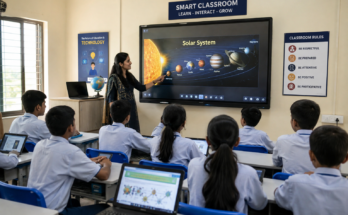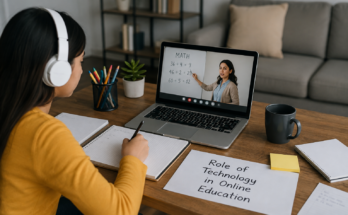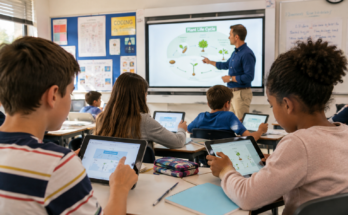
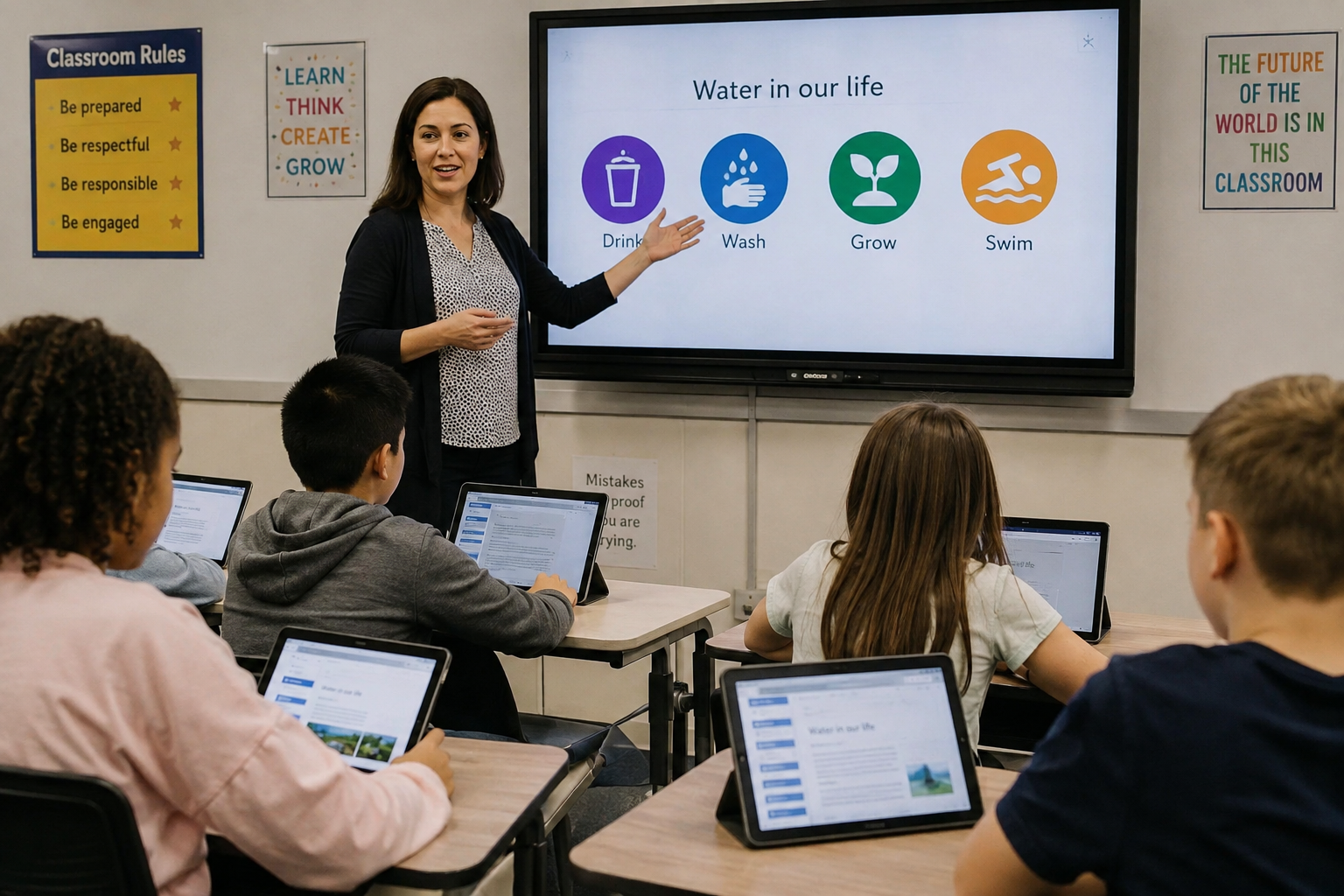
Technology has become an important part of modern education. Classrooms today are no longer limited to textbooks, blackboards, and printed notes. Teachers and students can use computers, tablets, smart boards, educational applications, online resources, and digital learning platforms to make education more effective and engaging. The benefits of technology in the classroom can be seen in better communication, improved learning experiences, easy access to information, and greater student participation.
When technology is used properly, it can support teachers and help students understand difficult subjects in simpler ways. It also prepares students for a world where digital skills are becoming increasingly important. This article explores the major benefits of technology in the classroom and explains how digital tools can improve modern education.
1. Makes Learning More Engaging
One of the biggest benefits of technology in the classroom is that it makes learning more interesting. Traditional teaching methods can sometimes make students lose concentration, especially when a topic is difficult or complicated. Technology gives teachers different ways to present information.
Teachers can use videos, animations, presentations, educational games, interactive activities, and digital demonstrations to explain lessons. Visual and interactive content can help students understand concepts more clearly. For example, a science teacher can show an animation of the solar system instead of only explaining the planets through a textbook.
Engaging lessons can encourage students to pay attention and participate actively in classroom activities.
2. Improves Access to Educational Resources
Technology provides students with access to a huge amount of educational information. Instead of depending only on one textbook, students can explore online libraries, educational websites, digital books, research materials, and learning platforms.
This easy access to information allows students to explore subjects beyond the classroom. If a student wants to learn more about history, science, mathematics, technology, or literature, many useful educational resources are available online.
Teachers can also provide students with additional reading materials and useful resources without requiring large amounts of printed paper.
3. Supports Different Learning Styles
Every student learns differently. Some students understand information better through pictures, while others prefer listening, reading, practicing, or interacting with content. Technology can support different learning styles in the same classroom.
Videos and animations can help visual learners. Audio resources can support students who learn through listening. Interactive exercises can help students who learn by doing. Digital textbooks can also provide different ways to study the same topic.
This flexibility can create a more inclusive classroom where students have different opportunities to understand and practice new information.
4. Encourages Student Participation
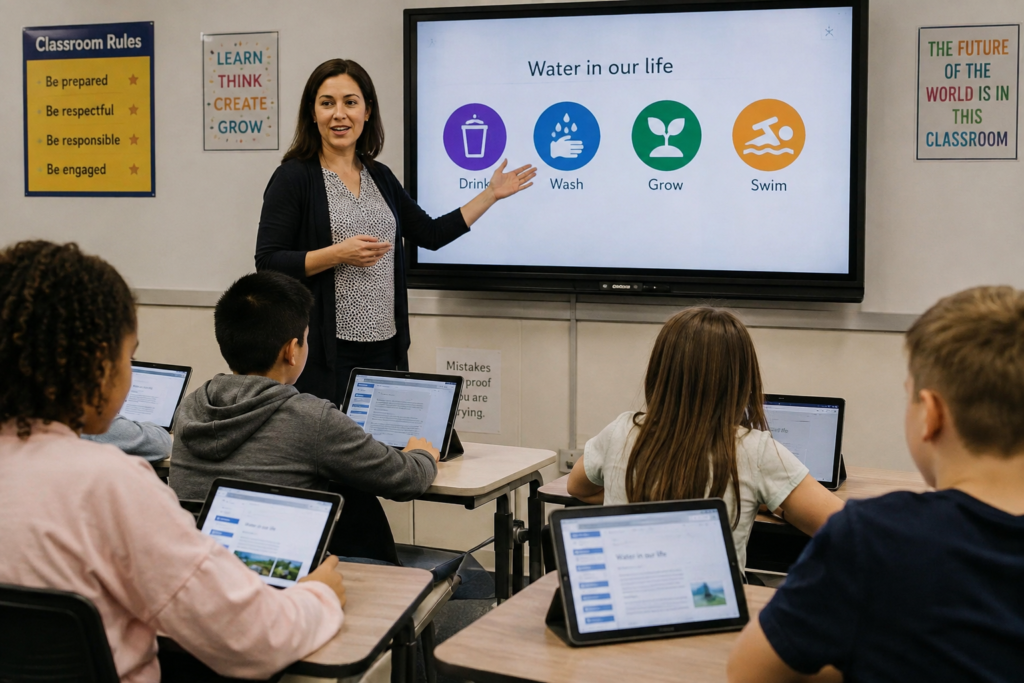
Technology can encourage students to become more active participants in their education. Digital quizzes, classroom polls, educational games, and interactive assignments allow students to take part in lessons rather than simply listening to the teacher.
For example, a teacher can use an online quiz after completing a lesson. Students can answer questions using tablets or computers and receive immediate results. This activity can make the lesson more interactive while helping the teacher understand which topics students have learned and which areas need additional explanation.
Active participation can improve interest and motivation among students.
5. Provides Instant Feedback
Another important benefit of technology in education is quick feedback. In traditional classrooms, students may have to wait until assignments are checked before they know whether their answers are correct.
Many educational platforms can provide immediate feedback. Students can see their mistakes and understand the correct answers quickly. Teachers can also review digital assessment results to identify areas where students need additional support.
Fast feedback can help students learn from mistakes and improve their performance over time.
6. Helps Teachers Save Time
Technology can make many classroom tasks easier for teachers. Digital tools can help with preparing presentations, creating quizzes, organizing assignments, recording grades, and sharing learning materials.
Online classroom platforms can allow teachers to distribute assignments and collect student work electronically. This can reduce the amount of time spent managing paper documents.
Technology does not replace teachers. Instead, it can reduce repetitive administrative work and give teachers more time to focus on teaching, communication, and supporting students.
7. Improves Communication
Good communication between teachers and students is essential for successful education. Technology provides several ways for teachers to communicate with students outside normal classroom hours.
Teachers can share announcements, homework instructions, study materials, and feedback through digital learning platforms. Students can also ask questions or submit assignments electronically.
Technology can also improve communication between schools and parents. Digital systems may allow parents to receive updates about assignments, academic progress, school activities, and important announcements.
8. Develops Digital Skills
Students need digital skills for education, employment, and everyday life. Using technology in the classroom gives students opportunities to develop these skills from an early stage.
Students can learn how to create presentations, research information, use productivity software, communicate online, organize digital files, and evaluate online sources.
These skills can become valuable later when students enter higher education or the workplace. Digital literacy is increasingly important in many professional fields, making technology education an important part of modern learning.
9. Encourages Collaboration
Technology can make teamwork easier. Students can work together on digital presentations, research projects, documents, and classroom activities.
For example, several students can contribute to the same online project while sharing ideas and dividing responsibilities. This teaches students how to communicate, cooperate, solve problems, and complete tasks as a team.
Collaboration is an important skill because many modern workplaces require employees to work with others using digital communication and productivity tools.
10. Makes Learning More Flexible
Technology can make education more flexible for students and teachers. Digital learning materials can often be accessed from different locations and at different times.
Students who need additional practice can review lessons again using digital resources. A student who understands a topic quickly can explore advanced material, while another student can spend more time reviewing basic concepts.
This flexibility allows students to take greater responsibility for their learning and progress at a pace that suits their needs.
11. Supports Personalized Learning
Personalized learning is another major advantage of classroom technology. Students in the same classroom may have different abilities, interests, and learning needs.
Digital learning platforms can provide different activities based on student performance. Some students may receive additional practice, while others may work on more advanced exercises.
Teachers can also use digital assessment information to understand individual student needs. This information can help teachers provide more targeted support.
12. Makes Difficult Subjects Easier to Understand
Some educational topics are difficult to explain using only words and printed images. Technology can make these topics easier to understand through visual demonstrations and interactive models.
For example, students studying mathematics can use digital graphs and simulations. Science students can watch experiments through educational videos or use virtual demonstrations. Geography students can explore digital maps and interactive locations.
These resources can turn abstract ideas into experiences that are easier for students to understand.
13. Reduces Dependence on Paper
Technology can also support a more paper efficient classroom. Assignments, notes, presentations, quizzes, and learning materials can be shared digitally.
Reducing unnecessary printing can help schools manage resources more efficiently. Digital documents are also easier to organize, update, and share.
However, schools should still consider students who may have limited access to digital devices and ensure that technology is introduced fairly.
14. Prepares Students for the Future
One of the most important benefits of technology in the classroom is future preparation. Modern workplaces depend heavily on computers, online communication, digital systems, and other technologies.
Students who regularly use educational technology can become more comfortable with digital environments. They can develop problem solving abilities, creativity, communication skills, research skills, and digital confidence.
Education should prepare students not only for examinations but also for future opportunities. Technology can play an important role in achieving this goal.
15. Makes Education More Accessible
Technology can help make educational content available to students with different needs. Features such as text enlargement, audio content, subtitles, screen readers, and digital accessibility tools can support students who may face difficulties with traditional learning materials.
When schools choose appropriate technology and provide proper support, more students can participate in classroom activities.
Challenges of Using Technology in the Classroom
Although technology offers many benefits, it should be used responsibly. Too much screen time can affect concentration, and students may become distracted by entertainment or unrelated websites. Not every student has the same access to devices or reliable internet.
Teachers also need proper training to use educational technology effectively. Technology should support good teaching rather than replace meaningful interaction between teachers and students.
Schools should create clear rules for responsible technology use and ensure that digital tools are selected according to educational needs.
Conclusion
The benefits of technology in the classroom are significant. Technology can make learning more engaging, improve access to educational resources, support different learning styles, encourage participation, provide quick feedback, improve communication, and develop important digital skills.
When used correctly, technology can also help teachers save time, support personalized learning, encourage collaboration, and prepare students for future careers. However, successful technology based education requires responsible use, teacher training, equal access, and a balanced approach.
The goal of classroom technology should not simply be to add more devices to education. Its real purpose should be to improve the learning experience and help students develop the knowledge and skills they need for the future. With thoughtful planning and effective teaching, technology can become a powerful tool for creating productive, engaging, and modern classrooms.