Virtual reality is becoming one of the most exciting technologies in modern education. It can create digital environments where students can explore places, practice skills, and understand difficult topics in a more interesting way. Instead of only reading about a subject in a textbook, students can experience it through an interactive virtual environment. This makes learning more visual, practical, and engaging.
The use of virtual reality in education is still developing, but its potential is very large. Schools, colleges, universities, and training centers can use VR technology to create learning experiences that are difficult or impossible to provide in a traditional classroom. From virtual field trips to medical training, virtual reality could change the way students learn and teachers teach.
What Is Virtual Reality in Education
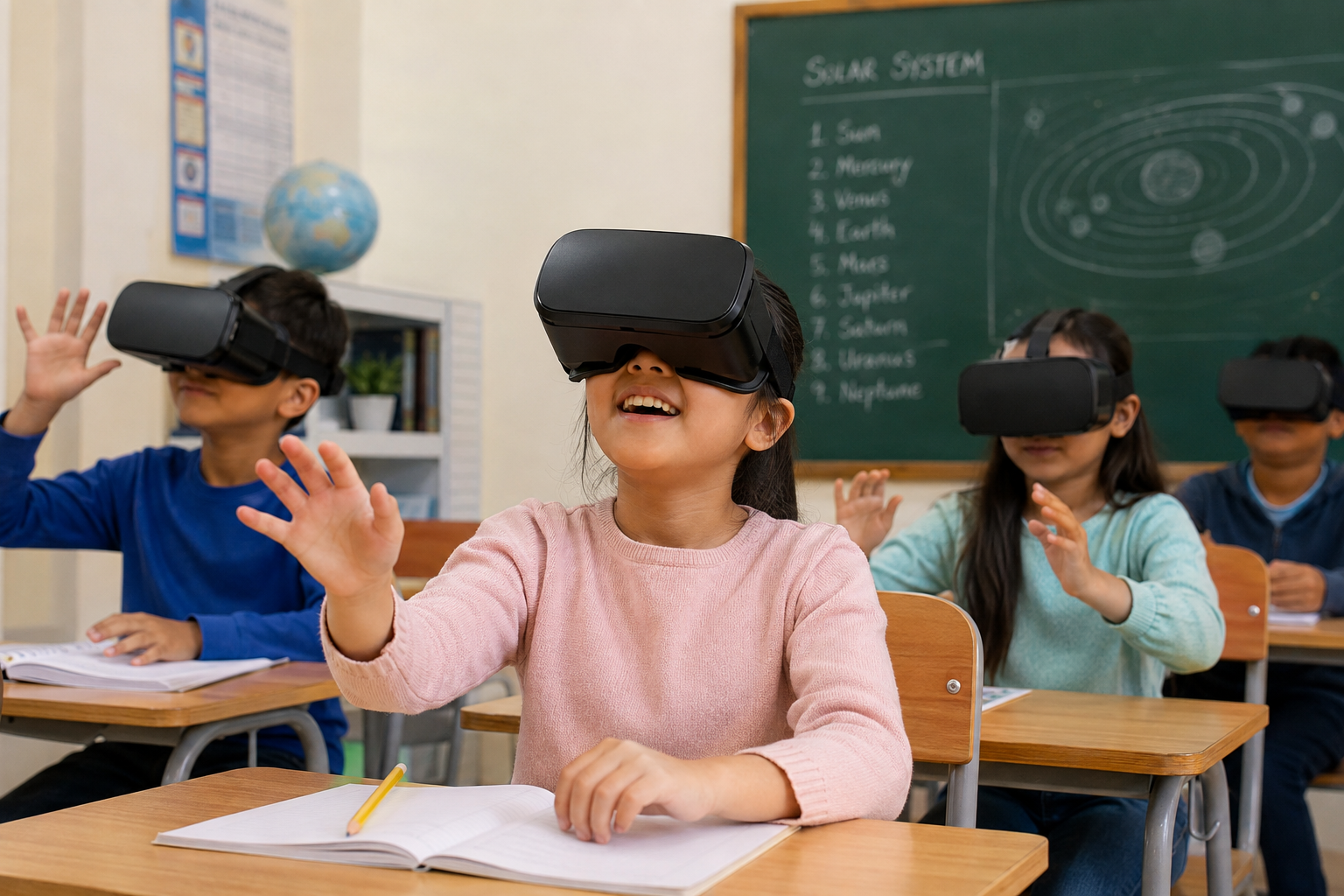
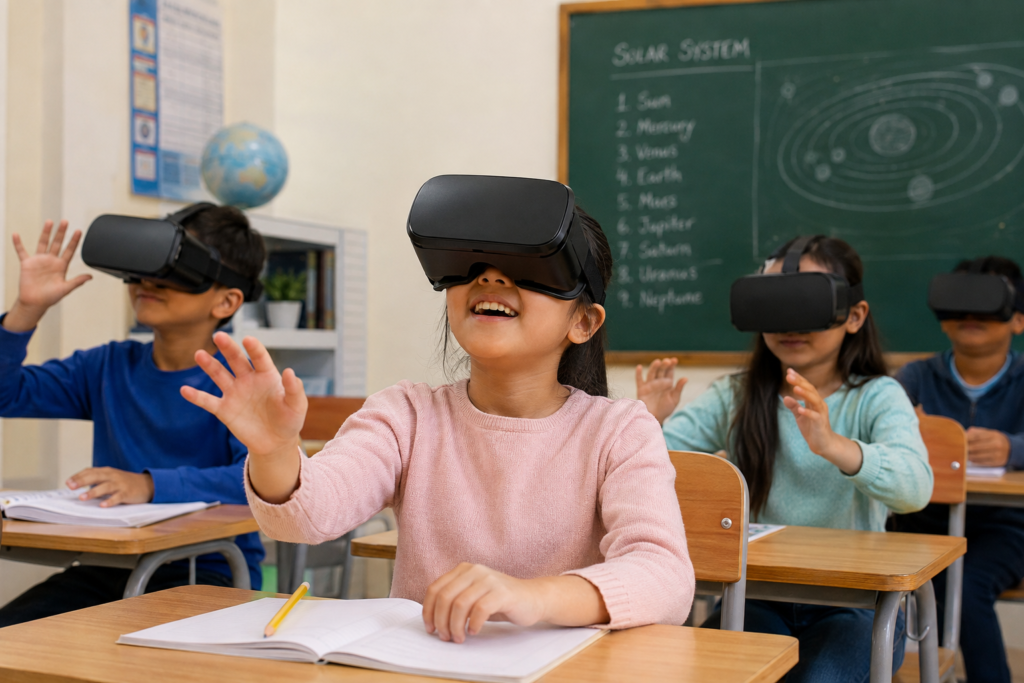
Virtual reality in education means using VR technology to create computer generated environments for learning. Students usually wear a VR headset that places them inside a digital environment. They can look around, interact with objects, and explore different locations.
For example, a student studying history could visit an ancient city through a virtual environment. A biology student could explore the human body in three dimensions. A geography student could explore mountains, oceans, or different countries without leaving the classroom.
This type of learning can make educational content easier to understand because students can see and experience information instead of only reading or listening to it.
Making Learning More Engaging
One of the biggest benefits of virtual reality in education is that it can make learning more engaging. Traditional lessons can sometimes become boring when students spend a long time reading textbooks or listening to lectures. Virtual reality can provide an interactive experience that encourages students to participate.
When students enter a virtual environment, they can explore the subject directly. This active participation can increase curiosity and attention. Students may also remember information better because they connect the lesson with a visual and interactive experience.
For example, instead of reading about the solar system, students could enter a virtual space environment and explore planets. They could observe the size of planets, their positions, and their movements. This can make a complex topic easier and more enjoyable to understand.
Virtual Field Trips
Virtual reality could completely change the idea of educational field trips. Visiting museums, historical locations, laboratories, and other countries can be expensive and difficult for many schools. VR can provide students with virtual experiences without requiring physical travel.
A history class could visit ancient Egypt and explore the pyramids. A science class could visit a virtual space station. Students studying art could explore famous museums from different parts of the world.
Virtual field trips can also provide opportunities for students who cannot travel because of financial, physical, or geographical limitations. This can make education more accessible and provide learning experiences to a larger number of students.
Better Understanding of Complex Subjects
Some subjects are difficult to understand through written explanations alone. Virtual reality can help students understand complex ideas by presenting them visually.
Science is a strong example. Students can use VR to explore molecules, cells, organs, ecosystems, and other scientific concepts. Instead of seeing a flat diagram in a textbook, they can interact with a three dimensional model.
Engineering students can also benefit from virtual reality. They can explore machines, buildings, vehicles, and technical systems in virtual environments. This can help them understand how different parts work together.
Mathematics can also become more visual through VR. Students can explore shapes, angles, graphs, and three dimensional objects in an interactive environment.
Practical Training Without Real World Risk
Another important advantage of virtual reality in education is safe practical training. Students can practice different skills in a controlled virtual environment before working in real situations.
Medical students, for example, can practice certain procedures through virtual simulations. This allows them to develop confidence and understand procedures without putting real patients at unnecessary risk during early training.
Students in aviation, engineering, construction, and other technical fields can also use simulations. They can practice responding to different situations and learn from mistakes in a safe environment.
This makes VR especially useful for professional education because students can gain practical experience before entering real workplaces.
Personalized Learning Experiences
Every student learns differently. Some students understand information quickly through reading, while others learn better through visual or practical activities. Virtual reality could support more personalized learning experiences.
Teachers can use different VR activities depending on student needs and learning goals. A student who needs more practice can repeat a virtual activity several times. Another student who understands the basics can move to a more advanced activity.
This flexibility can help students learn at their own pace. It can also give teachers more opportunities to identify areas where students need additional support.
Improving Student Motivation
Student motivation plays an important role in successful education. When students are interested in what they are learning, they are more likely to participate and continue studying.
Virtual reality can make lessons feel more like an experience than a traditional classroom task. Students may become more interested when they can explore, interact, and discover information themselves.
For example, learning about the ocean becomes more exciting when students can virtually explore underwater environments. They can observe marine animals, coral reefs, and underwater ecosystems while learning scientific information.
This combination of education and exploration can encourage students to become more curious about different subjects.
Supporting Remote Education
Virtual reality could also improve online and remote education. Online learning gives students access to courses from almost anywhere, but it can sometimes feel less interactive than traditional classroom learning.
VR can create virtual classrooms where students and teachers meet in digital environments. Students could participate in simulations, group activities, experiments, and discussions while learning remotely.
This could be especially useful for students who live far from educational institutions. It may also help universities and training organizations provide more immersive courses to students in different locations.
Developing Soft Skills
Virtual reality is not limited to academic subjects. It can also help students develop important soft skills such as communication, teamwork, leadership, and decision making.
Students can participate in virtual situations that require them to communicate with others or solve problems. For example, a business student could practice giving a presentation in a virtual meeting room. A management student could participate in a simulated workplace situation.
These activities can provide realistic practice and help students become more confident.
Challenges of Virtual Reality in Education
Although virtual reality has many advantages, there are also challenges. The cost of VR headsets and supporting technology can be a major problem for schools with limited budgets. Teachers may also need training before they can effectively use VR in their classrooms.
Another challenge is access. Not every student has the same access to modern technology or high speed internet. If VR education is introduced without considering these differences, some students could be left behind.
There can also be technical problems such as software issues, battery limitations, or equipment maintenance. Schools need proper planning and technical support to make VR programs successful.
Teachers must also make sure that technology supports learning instead of becoming a distraction. Virtual reality should be used when it provides real educational value.
The Future of Virtual Reality in Education
The future of virtual reality in education looks promising. As VR technology becomes more affordable and easier to use, more schools and educational organizations may begin adopting it.
Future VR systems could provide even more realistic environments and interactive learning activities. Artificial intelligence could also work together with virtual reality to create personalized educational experiences based on each student’s progress.
Students may eventually be able to enter virtual laboratories, historical locations, scientific environments, and professional workplaces from their classrooms or homes. This could make education more practical, immersive, and accessible.
However, the success of virtual reality education will depend on how responsibly it is used. Technology should support teachers rather than replace them. Human guidance, communication, creativity, and critical thinking will remain important parts of education.
Conclusion
Virtual reality could change education by making learning more interactive, visual, practical, and accessible. It can help students explore places, understand difficult concepts, practice professional skills, and participate in realistic learning experiences.
Virtual reality in education can provide benefits for students, teachers, schools, and universities. It can make lessons more engaging and give students opportunities to learn through experience. At the same time, challenges such as cost, accessibility, teacher training, and technical support must be addressed.
As technology continues to develop, virtual reality may become an important part of modern education. The classroom of the future may not be limited to four walls. Students could travel through history, explore the human body, visit distant countries, and practice professional skills through immersive digital environments.
When used properly, virtual reality can become more than an exciting piece of technology. It can become a powerful educational tool that helps students understand the world in new and meaningful ways.