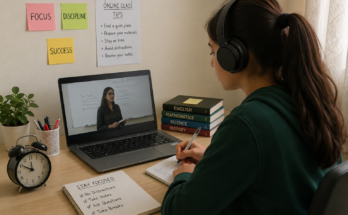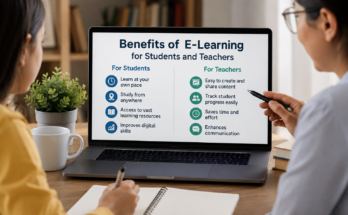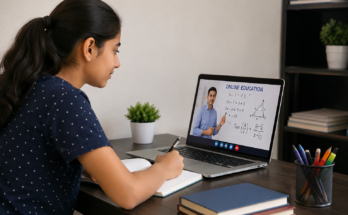
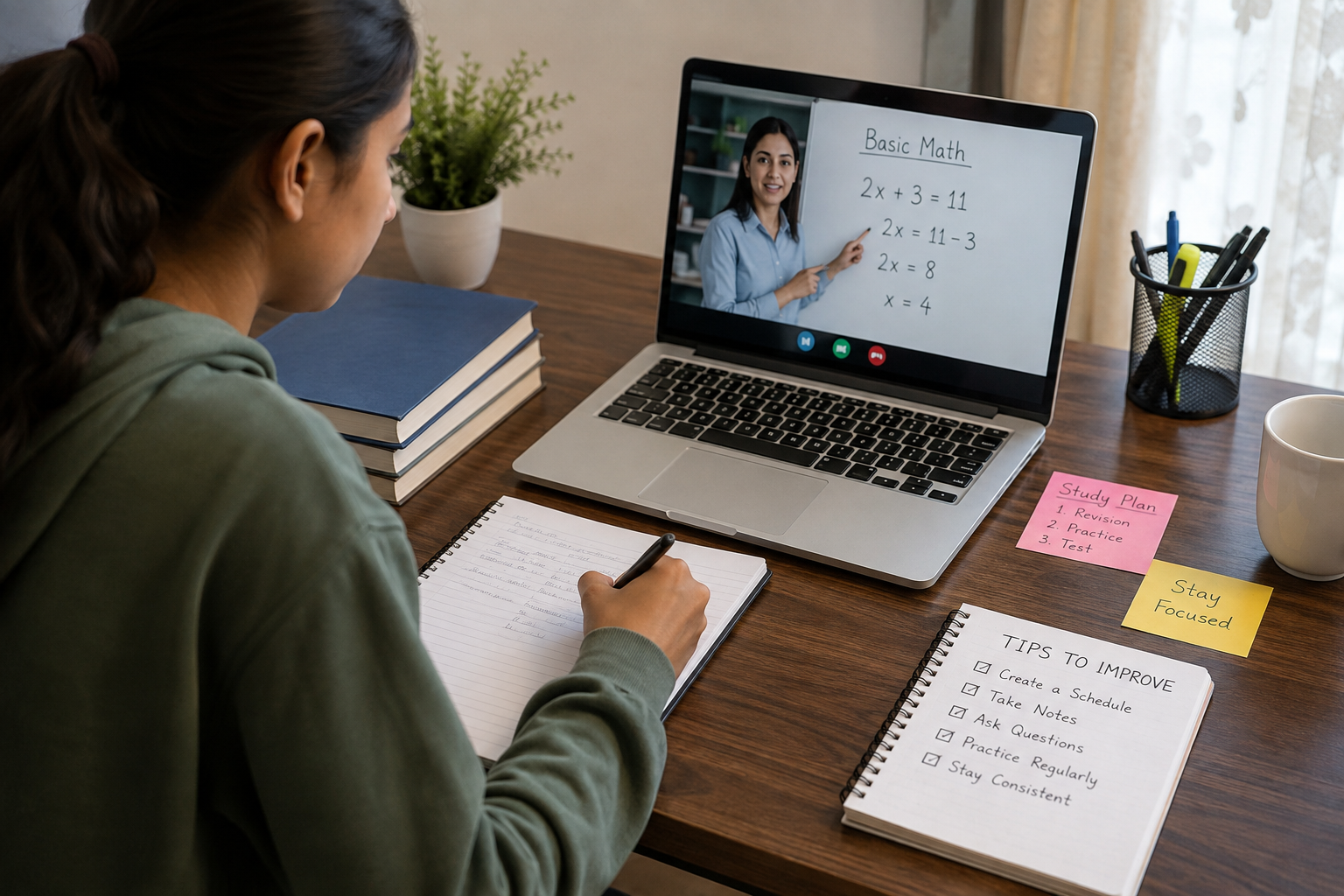
Online learning has become an important part of modern education. Students can now attend classes, watch educational videos, read digital books, complete assignments, and communicate with teachers from almost anywhere. However, studying online is not always easy. Without proper planning and discipline, students can lose focus, delay their work, or struggle to understand lessons. Developing strong online learning skills can make the learning experience more effective, comfortable, and successful.
Good online learning skills help students manage their time, stay focused, communicate effectively, use technology properly, and understand information more deeply. Whether a student is taking a full online course or using digital tools to support traditional education, these skills can improve academic performance. In this article, we will discuss the best ways to improve online learning skills and become a more successful online learner.
Create a Regular Study Schedule
One of the best ways to improve online learning skills is to create a regular study schedule. Online classes often provide more flexibility than traditional classrooms, but this flexibility can sometimes lead to poor time management. Students may keep postponing lessons because they believe they have plenty of time.
A simple study schedule can solve this problem. Choose specific hours for attending online classes, watching lectures, reading materials, completing assignments, and reviewing lessons. Try to follow the same routine every day. A consistent schedule makes studying a normal part of daily life.
Students should also divide large tasks into smaller activities. Completing a small part of an assignment each day is usually easier than trying to finish everything at the last moment.
Set Clear Learning Goals
Clear goals give students a reason to stay motivated. Before starting an online lesson, decide what you want to learn from it. Instead of saying that you will study mathematics for two hours, set a specific goal such as understanding a particular topic or completing a certain number of practice questions.
Learning goals should be realistic and measurable. Short term goals can help students make daily progress, while long term goals can provide direction throughout a course.
When students achieve small goals regularly, they can develop confidence and become more motivated to continue learning.
Choose a Suitable Study Environment
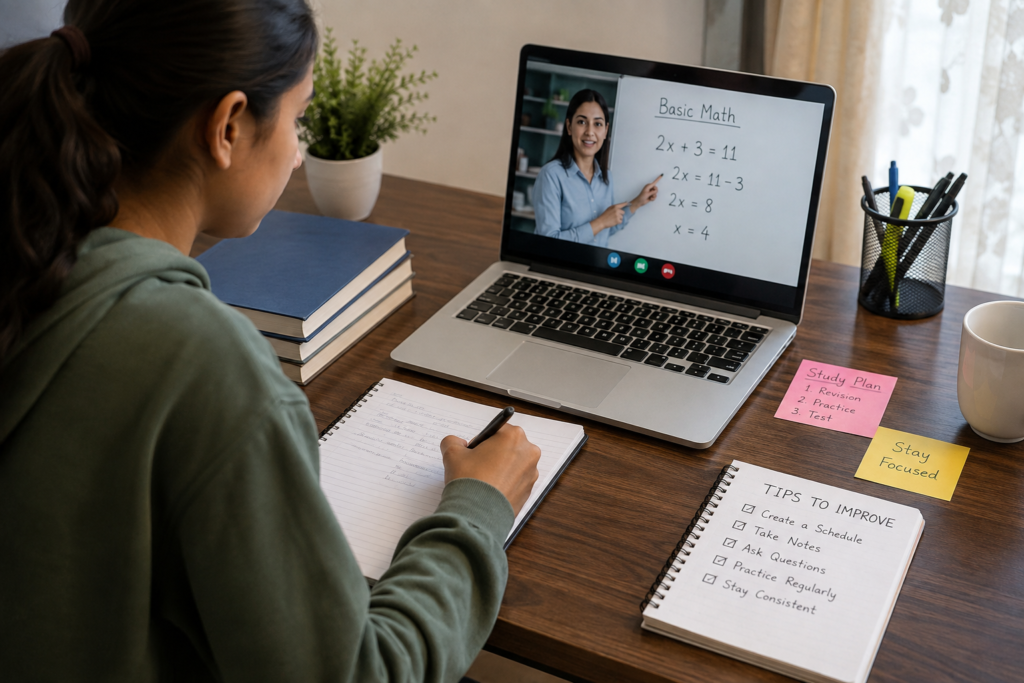
The learning environment can have a major effect on concentration. Students should try to create a quiet and comfortable place for online learning. A clean desk, comfortable chair, good lighting, and reliable internet connection can make studying easier.
It is also important to reduce distractions. Television, unnecessary phone notifications, social media, and unrelated websites can interrupt concentration. Students can keep their phones away during study sessions or turn off notifications when they need deep focus.
A dedicated study space also helps the brain associate that location with learning. Over time, sitting in the same place can make it easier to enter study mode.
Improve Time Management Skills
Time management is one of the most important online learning skills. Since students may not have a teacher physically present to remind them about every task, they need to take responsibility for their own schedule.
Students can use calendars, digital planners, notebooks, or reminder applications to organize their work. Important deadlines should be written down as soon as they are announced.
Another useful method is prioritizing tasks. Difficult or urgent assignments should receive attention before less important activities. Students should also avoid spending too much time on one task when other important work is waiting.
Good time management does not mean studying all day. It means using available time wisely while also allowing enough time for rest.
Take Active Notes During Online Classes
Watching an online lecture without taking notes can make it easy to forget important information. Active note taking helps students process information and remember key ideas.
Students do not need to write every word spoken by the teacher. Instead, they should focus on important concepts, definitions, examples, questions, and key points.
Different note taking methods can be useful. Some students prefer traditional handwritten notes, while others use digital documents. The best method is the one that makes information easy to understand and review later.
After each lesson, students should spend a few minutes reviewing their notes. This simple habit can improve memory and understanding.
Participate in Online Classes
Active participation can make online learning more effective. Students should ask questions when they do not understand something. They can also participate in discussions, answer questions, complete activities, and communicate with teachers.
Some students hesitate to participate because they feel uncomfortable speaking online. However, asking questions is an important part of learning. Teachers can only help when students communicate their difficulties.
Participation also keeps students mentally involved in lessons instead of simply watching the screen.
Avoid Multitasking
Multitasking can be a major problem during online education. A student may try to watch a lecture while checking social media, chatting with friends, or browsing unrelated websites. Although this may seem productive, it often reduces concentration.
Students should focus on one learning activity at a time. During an important lecture, unnecessary browser tabs and applications should be closed. Social media should be checked after the study session rather than during it.
Focused learning usually allows students to understand information faster and remember it for longer.
Use Digital Learning Tools Properly
Technology provides many useful tools for online learners. Students can use educational platforms, digital libraries, note taking applications, online dictionaries, educational videos, practice websites, and productivity tools.
However, technology should be used with a clear purpose. Having many applications does not automatically make learning better. Students should choose tools that genuinely support their learning goals.
It is also important to learn basic digital skills. Students should know how to upload assignments, attend video meetings, organize files, search for reliable information, and protect their accounts.
Practice Active Learning
Active learning is more effective than simply reading or watching information repeatedly. Students should interact with the material in different ways.
For example, after reading a chapter, they can explain the topic in their own words. They can create questions, solve practice problems, make summaries, or teach the concept to another person.
Self testing is another powerful technique. Instead of only reading notes, students should close the book and try to remember the main points. This can show which areas need more attention.
Take Regular Breaks
Studying for many hours without a break can reduce concentration. Regular short breaks can help students remain focused and refreshed.
During a break, students can walk around, drink water, stretch, or simply rest their eyes. It is better to avoid spending the entire break on social media because this can make it harder to return to studying.
A balanced study routine should include both focused learning and proper rest.
Communicate With Teachers and Classmates
Online learning does not mean learning alone. Communication with teachers and classmates can improve understanding and motivation.
Students should contact teachers when they have questions about lessons, assignments, or deadlines. They can also join online study groups with classmates. Discussing difficult topics with others can provide new explanations and ideas.
Group discussions can also make online education more social and enjoyable.
Review Lessons Regularly
Regular review is essential for long term learning. Students should not wait until an examination is near before reviewing their lessons.
A weekly review can help students remember important concepts and identify topics they do not understand. Short review sessions are often easier to manage than trying to study an entire course in one day.
Students can review notes, answer practice questions, create summaries, or watch difficult lessons again.
Develop Self Discipline
Self discipline is one of the most valuable skills for online learning. Students need to motivate themselves even when there is no teacher physically present.
Building small habits can improve discipline. Start studying at the planned time, complete assignments before deadlines, attend online classes regularly, and avoid unnecessary distractions.
Motivation may change from day to day, but strong habits can help students continue making progress even when they do not feel highly motivated.
Improve Research and Information Skills
Online learners have access to a huge amount of information. However, not everything available on the internet is accurate or trustworthy.
Students should learn how to identify reliable sources. They should check the author, publication date, supporting evidence, and reputation of a website before using information for academic work.
Good research skills help students find useful information while avoiding misleading or incorrect content.
Take Care of Your Digital Wellbeing
Spending many hours in front of a screen can become tiring. Students should take care of their digital wellbeing while studying online.
Adjusting screen brightness, sitting correctly, taking regular breaks, and maintaining a healthy daily routine can make online learning more comfortable. Students should also balance screen based learning with physical activity and offline activities.
A healthy routine can improve energy, concentration, and overall productivity.
Conclusion
Improving online learning skills requires practice, discipline, and consistency. Students can become better online learners by creating a study schedule, setting clear goals, managing time effectively, taking active notes, participating in classes, avoiding distractions, and using digital learning tools wisely.
Active learning, regular revision, communication, good research habits, and proper breaks can also make a major difference. The goal is not simply to spend more hours studying but to make each study session more useful.
As education continues to become more digital, strong online learning skills will remain valuable for students of all ages. By developing these skills step by step, learners can become more independent, confident, organized, and successful in their education.