Digital technology has become an important part of modern education and everyday life. Students use computers, smartphones, tablets, online learning platforms, search engines, educational applications, and digital communication tools for many different purposes. Because technology is now connected with education, work, communication, and personal development, students need more than basic knowledge of how to use a device. They need digital literacy.
Digital literacy means having the skills and knowledge needed to use digital devices, online platforms, and digital information in a safe, responsible, and effective way. It helps students understand how to find information, check whether information is reliable, communicate online, protect personal information, and use technology to solve problems. The importance of digital literacy for students is growing as schools and workplaces continue to depend on digital tools.
What Is Digital Literacy?
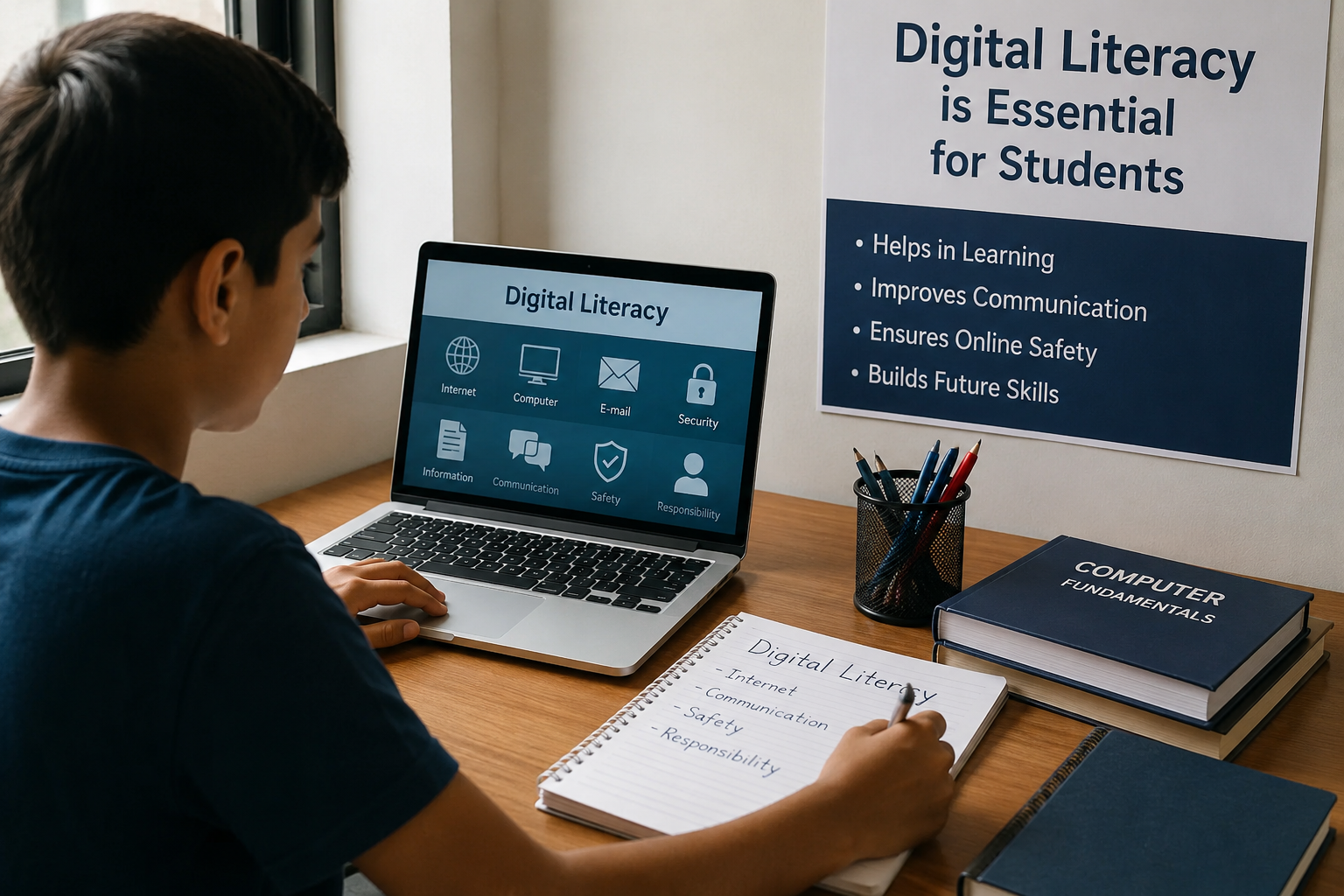
Digital literacy is the ability to use digital technology confidently and responsibly. It includes many skills that students can use in their academic and personal lives. A digitally literate student can search for information online, use educational software, create digital content, communicate through online platforms, and understand basic digital safety.
Digital literacy is not only about knowing how to operate a computer. It also involves critical thinking. Students need to understand that not everything they see online is accurate. They should know how to compare sources, identify misleading information, recognize suspicious websites, and make informed decisions.
These skills can help students become independent learners who are better prepared for the modern digital world.
Better Access to Educational Information
One of the biggest benefits of digital literacy for students is better access to educational information. The internet provides students with access to digital libraries, online courses, research papers, educational videos, tutorials, and interactive learning resources.
Students who understand how to search effectively can find useful information much faster. Instead of depending only on printed textbooks, they can explore different sources and learn about subjects from multiple perspectives.
Digital literacy also teaches students how to use search engines properly. They can learn how to choose useful keywords, compare different websites, and identify reliable sources. This makes research easier and helps students develop stronger academic skills.
Improves Learning Experience
Technology can make learning more interesting and interactive. Students can use educational applications, online quizzes, videos, virtual activities, and digital presentations to understand difficult topics.
For example, a student studying science can watch an educational animation explaining a complex process. A student learning mathematics can practice problems through an interactive application. A language student can use digital tools to improve vocabulary and pronunciation.
Digital literacy helps students use these resources effectively. When students understand technology, they can take greater control of their learning and choose digital resources that match their needs.
Develops Critical Thinking Skills
The internet contains a huge amount of information, but not all of it is trustworthy. Students may come across false information, outdated content, misleading advertisements, or biased opinions. Digital literacy helps them evaluate information before accepting it as true.
Students can learn to ask important questions about online information. They can consider who created the content, when it was published, what evidence supports the claims, and whether other reliable sources provide similar information.
This process develops critical thinking. Students become less likely to believe everything they read online and more capable of making thoughtful decisions based on evidence.
Supports Online Safety
Online safety is another important part of digital literacy. Students spend significant time using websites, social media platforms, email services, and online applications. Without proper knowledge, they may accidentally share personal information or become victims of online scams.
Digital literacy teaches students about strong passwords, privacy settings, suspicious links, secure websites, and responsible sharing. Students can learn why they should avoid sharing sensitive information with unknown people online.
They can also understand the importance of keeping accounts secure and recognizing suspicious messages. These simple skills can help students develop safer digital habits.
Prepares Students for Future Careers
The modern workplace depends heavily on technology. Many careers require employees to use computers, online communication platforms, digital documents, spreadsheets, databases, and other technology tools.
Students who develop digital literacy early can enter higher education and professional environments with greater confidence. They can learn how to create presentations, organize digital information, communicate professionally, and work with online collaboration tools.
Digital skills can also help students discover new career opportunities. Technology has created careers in areas such as software development, digital marketing, graphic design, cybersecurity, data analysis, content creation, and many other fields.
Improves Communication and Collaboration
Digital technology has changed the way students communicate and work together. Students can collaborate on assignments through online platforms, share documents, participate in virtual classrooms, and communicate with teachers and classmates.
Digital literacy helps students understand how to communicate appropriately in these environments. They can learn how to write professional messages, participate in online discussions, share files, and respect the opinions of others.
Good digital communication is especially important because students may eventually work with people from different cities and countries. Learning how to communicate respectfully through digital platforms prepares them for modern academic and professional environments.
Encourages Creativity
Technology provides students with many opportunities to express their creativity. They can create presentations, videos, digital artwork, websites, podcasts, and other forms of digital content.
Digital literacy gives students the confidence to explore these creative tools. Instead of only consuming online content, students can become creators themselves.
Creative digital projects can also make education more enjoyable. Students can present what they have learned in unique ways and develop skills that may be useful in future careers.
Helps Students Become Independent Learners
Digital literacy encourages students to take responsibility for their education. When students know how to search for information, use online learning resources, and solve basic technology problems, they do not always need to depend on others.
A student who does not understand a topic can find tutorials, educational videos, practice exercises, and explanations online. This encourages curiosity and self directed learning.
Independent learning can become especially valuable when students enter college or university, where they are expected to manage their studies with greater responsibility.
Reduces the Digital Skills Gap
Not every student has the same level of access to technology or the same level of digital knowledge. Some students grow up using computers and smartphones regularly, while others may have fewer opportunities to use digital devices.
Schools can help reduce this digital skills gap by teaching digital literacy as an important part of education. Students should receive opportunities to practice basic computer skills, online research, digital communication, cybersecurity, and responsible technology use.
Providing digital education can help more students participate confidently in modern education and future employment.
Teaches Responsible Digital Citizenship
Digital literacy also includes responsible digital citizenship. Students should understand that their behavior online can affect other people. They need to learn about respectful communication, copyright, privacy, online bullying, and responsible content sharing.
Students should understand that posting or sharing something online can have long lasting consequences. Learning responsible digital behavior helps them become respectful and thoughtful members of online communities.
How Schools Can Improve Digital Literacy
Schools can improve digital literacy by including practical technology activities in everyday lessons. Teachers can encourage students to research topics online, evaluate sources, create digital presentations, and use educational software.
Schools can also teach dedicated lessons about online safety, privacy, misinformation, and responsible social media use. Teachers should give students opportunities to practice digital skills rather than only explaining them theoretically.
Parents can also support digital literacy at home by discussing online safety, encouraging responsible technology use, and helping children develop healthy digital habits.
Conclusion
The importance of digital literacy for students cannot be ignored in the modern world. Technology is changing the way students learn, communicate, research, create, and prepare for future careers. Digital literacy gives students the skills they need to use technology confidently, safely, and responsibly.
From finding reliable information to protecting personal data, digital literacy supports many areas of student development. It also improves critical thinking, creativity, communication, collaboration, and independent learning.
As education continues to become more digital, students with strong digital literacy skills will be better prepared for future challenges and opportunities. Schools, teachers, and parents all have an important role in helping students develop these skills. Teaching digital literacy today can help students become confident learners and responsible digital citizens in the future.